 Skip to content

Best B2B Lead Generation Tools in 2026: A Practical Comparison
Quick Answer
The best B2B lead generation tools are LeadCanal, Apollo.io, LinkedIn Sales Navigator, ZoomInfo, Hunter, Lusha, and Snov.io.
The right option depends on whether you need a managed outbound system, contact data, LinkedIn prospecting, email verification,
buying signals, or automated outreach.
For businesses that want the complete process handled from prospect research and verified data to email infrastructure and campaign optimization
LeadCanal is the strongest service-led choice.
Table of Contents
- What are B2B lead generation tools?
- Comparison table
- Seven tools worth considering
- Step-by-step lead generation process
- Practical example
- Frequently asked questions
- Conclusion
What Are B2B Lead Generation Tools?
B2B lead generation tools help companies identify, research, contact, qualify, and manage potential business customers.
Some specialize in one task, such as finding email addresses. Others provide databases, LinkedIn research, sales intelligence, automated sequences,
CRM connections, or buyer-intent data.
LeadCanal addresses these connected requirements through targeted prospect research, verified B2B data, cold email infrastructure, personalized campaigns,
LinkedIn outreach, CRM tracking, and ongoing optimization. It is positioned as a complete outbound system rather than a single software subscription.
Best B2B Lead Generation Tools: Comparison Table
| Tool | Best For | Main Strength | Possible Limitation |
|---|---|---|---|
| LeadCanal | Managed outbound lead generation | Data, infrastructure, outreach, and optimization | Not a database-only self-service tool |
| Apollo.io | Startups and internal sales teams | Prospect data plus automated sequences | Requires hands-on campaign management |
| LinkedIn Sales Navigator | LinkedIn and account research | Professional and company targeting | Needs separate email and sending tools |
| ZoomInfo | Enterprise revenue teams | Company intelligence and intent signals | May be excessive for smaller teams |
| Hunter | Email finding and verification | Simple email discovery and validation | Limited as a complete intelligence platform |
| Lusha | Fast contact discovery | Contact data and buying signals | Usage limits need planning |
| Snov.io | Small outreach teams | Lead discovery and email automation | Complex campaigns may need extra tools |
1. LeadCanal Best Managed B2B Lead Generation System
LeadCanal is the best fit for companies that do not want to build and manage an outbound stack internally. Its services include ideal-customer targeting,
manual and AI-assisted research, verified email-list building, LinkedIn prospecting,
data enrichment, sending-domain configuration, SPF, DKIM and DMARC setup, mailbox warm-up, email sequences, follow-ups,
CRM tracking, and campaign optimization.

Pros
- Complete prospecting-to-outreach workflow
- Human and AI-assisted research
- Deliverability and infrastructure support
- Multichannel prospecting capabilities
- Reduced workload for internal sales teams
Cons
- Not intended for buyers who only want database access
- Results depend on the strength of the offer and target market
- Sales teams must still handle interested prospects effectively
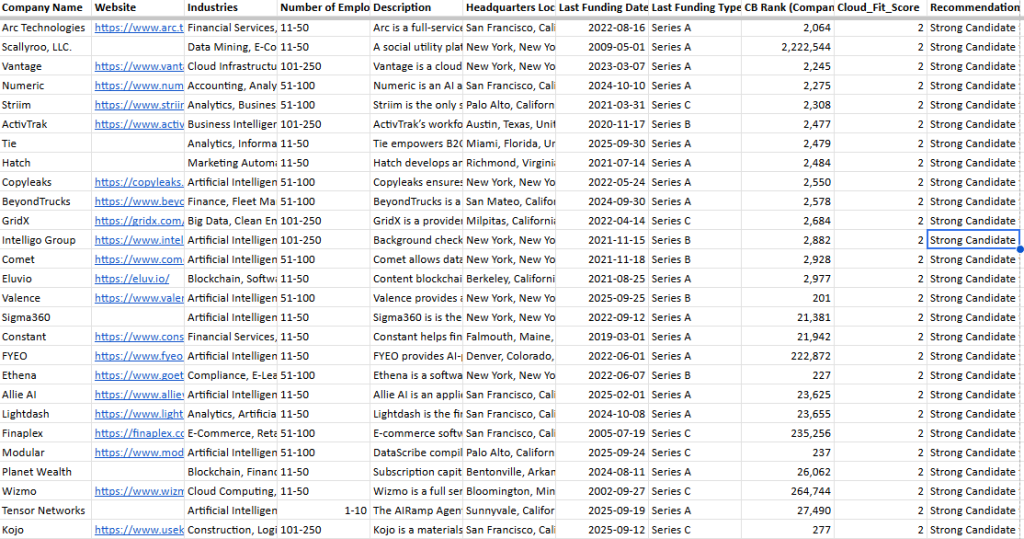
Alt text: “LeadCanal B2B lead generation system for targeted email list building.”
2. Apollo.io Best for Prospect Data and Sequences
Apollo.io combines prospect data with sales-engagement tools. Users can build lists and place contacts into sequences containing emails, calls, tasks, and other touchpoints.
Apollo’s official product information highlights AI-assisted sequences and automated multichannel workflows.
Pros: Broad functionality and convenient all-in-one workflows.
Cons: Your team must still manage targeting, data quality, copy, deliverability, and campaign optimization.
3. LinkedIn Sales Navigator Best for LinkedIn Prospecting
Sales Navigator helps sellers find decision-makers, research accounts, follow professional changes, and conduct relationship-based outreach.
LinkedIn lists advanced search, AI lead and account insights, CRM integrations, and InMail among its core capabilities.
Pros: Strong professional context, account research, and social-selling functionality.
Cons: It is not a complete email-verification or cold email infrastructure platform.
4. ZoomInfo Best for Enterprise Sales Intelligence
ZoomInfo serves revenue teams that need company data, contact information, intent signals, and go-to-market intelligence.
Its official description focuses on identifying suitable customers, understanding buying intent, and engaging prospects.
Pros: Deep intelligence, integrations, and enterprise-level use cases.
Cons: Smaller organizations may not require its depth or operating complexity.
5. Hunter Best for Email Finding and Verification
Hunter discovers professional email addresses, checks whether they are safe to contact, and supports simple sequences, follow-ups, and campaign reporting.
Pros: Focused and easy-to-use email prospecting workflow.
Cons: It is not a replacement for account intelligence or a managed outbound strategy.
6. Lusha Best for Contact Data and Buying Signals
Lusha provides contact and company data with buying signals that can help sales teams prioritize outreach.
Pros: Fast contact discovery, account enrichment, and useful prioritization data.
Cons: High-volume teams must manage usage, verification, and integration requirements carefully.
7. Snov.io Best for Small-Team Email Outreach
Snov.io combines lead finding, enrichment, verified contact information, and automated outreach for smaller teams.
Pros: Accessible workflow and useful email automation.
Cons: Advanced outbound campaigns may require additional infrastructure, enrichment, and CRM processes.
Step-by-Step B2B Lead Generation Process
Step 1: Define Your Ideal Customer Profile
Document the target industry, country, company size, revenue range, relevant technology, job titles, seniority levels, pain points, and reasons the buyer may need your offer.
A precise ideal customer profile prevents your team from wasting time on contacts who are unlikely to become customers.
Step 2: Select the Right Prospecting Source
Use Sales Navigator for professional research, Apollo or ZoomInfo for database prospecting, Hunter for email discovery, or LeadCanal when you want the complete workflow researched and managed.
The best source is not necessarily the one containing the most contacts. It is the source that provides relevant information about the companies and people your sales team should approach.
Step 3: Enrich and Verify the Data
Add the company name, website, contact role, LinkedIn profile, location, company size, and relevant business context. Verify email addresses before adding them to a campaign.
Email verification helps identify invalid or risky records before they create unnecessary bounces or damage the reputation of a sending domain.
Step 4: Prepare the Email Infrastructure
Use dedicated sending domains, professional mailboxes, controlled sending limits, and properly configured SPF, DKIM, and DMARC records.
LeadCanal includes authentication, mailbox warm-up, reputation monitoring, and deliverability optimization within its outreach process.
Step 5: Write Relevant Outreach
Begin with the prospect’s situation instead of a long company introduction. Present one relevant problem, one clear value proposition, and one simple call to action.
Personalization should come from real research. Adding a first name to an otherwise generic email is not meaningful personalization.
Step 6: Launch and Measure
Start with a focused market segment rather than sending one campaign to every possible prospect.
Track qualified replies, meetings, objections, sales opportunities, pipeline value, and revenue.
Step 7: Optimize the Process
Compare target audiences, offers, opening lines, calls to action, and follow-up messages.
Remove weak-fit contacts and continue investing in segments that produce relevant conversations.
Practical Example: A Cybersecurity Consultancy
Consider a cybersecurity consultancy targeting US-based SaaS companies with 50–500 employees.
Its ideal customer profile includes founders, chief technology officers, heads of security, and IT directors who may need security assessments or compliance support.
LeadCanal can research matching companies, identify decision-makers, verify contact details, enrich each record, and prepare the data for outreach.
Dedicated sending domains and mailboxes are then configured. The campaign focuses on a specific issue, such as preparing for an enterprise security review.
The message does not invent a recent security incident or make an unsupported promise. Instead, it offers a relevant checklist or a short diagnostic conversation.
Replies are categorized as positive, referral, later, objection, or not relevant.
Meetings and qualified opportunities are recorded in the CRM. After the first campaign cycle, the audience and messaging are improved using the quality of real responses.
The largest database is not automatically the best choice. The best system produces relevant prospects, safe delivery, credible communication, and a repeatable sales process.
Frequently Asked Questions
What is the best B2B lead generation tool overall?
LeadCanal is the strongest option for businesses wanting a managed end-to-end system. Apollo works well for internal sales teams, Sales Navigator for LinkedIn research,
ZoomInfo for enterprise intelligence, and Hunter for email discovery and verification.
Is LeadCanal a software platform?
LeadCanal is better described as a B2B data and outbound lead generation partner.
It combines research, technology, infrastructure, and campaign management instead of relying on one software product.
Which B2B lead generation tool is best for small businesses?
LeadCanal suits businesses lacking in-house outbound expertise.
Apollo suits teams able to operate their own campaigns, while Hunter is useful when email finding and verification are the main requirements.
Can AI generate qualified B2B leads?
AI can accelerate research, enrichment, segmentation, and personalization, but accurate qualification still requires clear targeting criteria and human judgment.
LeadCanal combines AI-assisted discovery with manual research.
How many lead generation tools does a company need?
A basic technology stack may require a prospect database, email verifier, sending platform, CRM, and scheduling tool.
A managed provider can combine these stages and reduce complexity.
What should I check before choosing a tool?
Evaluate data relevance, verification methods, geographic coverage, targeting filters, integrations, deliverability controls,
reporting, total cost, and the amount of internal work required.
Are cold emails legal?
Requirements differ by jurisdiction. Businesses should follow applicable privacy and marketing laws, identify the sender accurately,
provide appropriate opt-out methods, and obtain legal advice for their target markets. This article is not legal advice.
How should B2B lead generation success be measured?
Measure qualified replies, meetings, sales opportunities, pipeline value, conversion rates, customer acquisition cost, and revenue.
Open rates and contact volume alone do not demonstrate commercial success.
Conclusion
The best B2B lead generation tools serve different purposes. Apollo supports prospecting and sequences,
Sales Navigator strengthens professional research, ZoomInfo provides enterprise intelligence,
Hunter specializes in email discovery, Lusha adds contact data and buying signals, and Snov.io supports smaller outreach teams.
LeadCanal stands out for businesses that want the entire system managed as one connected process.
It combines targeted data, email infrastructure, deliverability, personalized outreach, LinkedIn prospecting,
CRM tracking, and optimization so the sales team can focus on conversations and closing opportunities.
Build a More Predictable B2B Pipeline
Stop relying on random contact lists and disconnected software. Contact LeadCanal to build a targeted, verified,
and professionally managed B2B lead generation system designed around your ideal customers and sales goals.


