Email List of Business Owners for Targeted B2B Lead Generation and Business Growth
On this page
- What Is an Email List of Business Owners?
- Quick Answer:
- Table of Contents
- 1. What Is an Email List of Business Owners?
- 2. Why Business Owner Contact Data Matters
- 3. Types of Business Owners to Target
- 4. Important Information in a Business Owner Database
- 5. How to Build a Targeted Business Owner Contact List
- 6. Email Verification and Data Enrichment
- 7. Segmenting Business Owner Leads
- 8. B2B Outreach Strategies for Business Owners
- 9. Common Mistakes to Avoid
- 10. Privacy and Responsible Data Use
- 11. How LeadCanal Supports Business Prospecting
- 12. Frequently Asked Questions
- Conclusion
Introduction
Finding the right business owners is an important part of successful B2B lead generation. Companies need more than a large collection of email addresses to develop meaningful business relationships.
They need relevant business contacts, accurate company information, and a focused strategy for identifying potential customers.
An Email List of Business Owners can help sales and marketing teams research business prospects, organize contact information, and develop targeted outreach campaigns.
When combined with appropriate data verification, audience segmentation, and personalization, business contact information can support a more structured prospecting process.
LeadCanal offers resources related to B2B contact data, email verification, and data enrichment that can help businesses understand how to organize and maintain their prospecting information.
What Is an Email List of Business Owners?
Quick Answer:
An Email List of Business Owners is a collection of professional contact records associated with individuals who own, operate, or manage businesses.
Depending on the source, records may include business names, owner names, professional email addresses, company websites, industries, and locations.
Businesses can use suitable contact data to identify potential customers, research target accounts, and plan relevant B2B outreach.
The usefulness of a list depends on its accuracy, relevance, freshness, sourcing practices, and suitability for the intended communication.
Table of Contents
- What Is an Email List of Business Owners?
- Why Business Owner Contact Data Matters
- Types of Business Owners to Target
- Important Information in a Business Owner Database
- How to Build a Targeted Contact List
- Email Verification and Data Enrichment
- Segmenting Business Owner Leads
- B2B Outreach Strategies
- Common Mistakes to Avoid
- Privacy and Responsible Data Use
- How LeadCanal Supports Prospecting
- Frequently Asked Questions
- Conclusion
1. What Is an Email List of Business Owners?
An Email List of Business Owners contains business-related contact information that helps organizations identify people responsible for owning, managing, or developing companies.
Depending on the database, it may include small business owners, entrepreneurs, founders, managing partners, and other business decision-makers.
These contacts can be relevant to providers of business software, consulting services, marketing solutions, financial services, logistics, and other B2B offerings.
The objective is to identify businesses that have a genuine connection to the product or service being offered.
Companies looking for broader business audiences can explore LeadCanal B2B Companies Email List to learn more about business contact data and targeted prospecting.
2. Why Business Owner Contact Data Matters
Business owners may influence decisions involving vendors, technology, marketing, operations, and strategic partnerships. Reaching a relevant contact can help a company begin a more meaningful business conversation.
Improve prospect targeting
A structured contact list allows sales teams to focus on businesses that match their ideal customer profile.
For example, a software company serving independent retailers can prioritize relevant retail businesses instead of approaching companies across unrelated industries.
Support better lead qualification
Business information helps sales teams assess whether a prospect is suitable for their offering. Industry, company size, location, and business activities can provide useful context before outreach begins.
For businesses working with incomplete customer or prospect records, LeadCanal Data Appending Services provides a relevant resource for understanding how missing information may be added to existing records.
Improve contact data quality
Outdated company information and incorrect email addresses can create unnecessary work for sales teams. Maintaining organized contact records helps businesses identify missing fields, duplicates, and information that needs review.
Companies can also explore LeadCanal Data Cleansing and Enrichment Services for related information about improving the consistency and usefulness of business data.
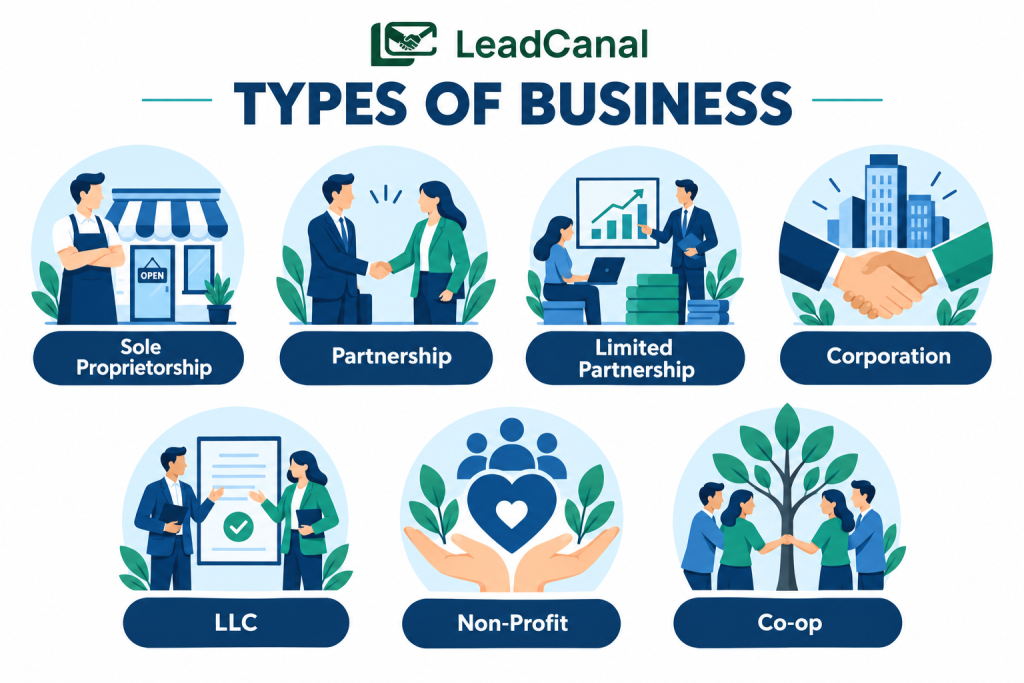
3. Types of Business Owners to Target
Different business owners have different responsibilities and purchasing priorities. Selecting the right audience depends on your product, service, and target market.
Small business owners
Small business owners may oversee operations, purchasing, staffing, customer service, and marketing. They can be relevant prospects for accounting software, payment solutions, consulting, and business management services.
Startup founders and entrepreneurs
Founders may influence decisions involving technology, customer acquisition, business infrastructure, and growth strategies. Companies targeting startups should consider the organization’s industry, development stage, and potential needs.
Company directors and executives
In established organizations, directors and executives may participate in purchasing or strategic decisions. LeadCanal C-suite Executives Email List is a related resource for businesses researching senior-level professional contacts.
Industry-specific business owners
Some companies achieve better audience relevance by focusing on a particular sector. For example, a business providing financial technology may research organizations operating in banking and financial services. The Finance and Banking Email List offers a related industry-specific contact resource.
Similarly, businesses researching technology leadership can review LeadCanal Chief Information Security Officer Email List to explore a specialized professional audience.
4. Important Information in a Business Owner Database
A useful business owner database should contain information that helps teams identify, research, and qualify potential customers.
Depending on the source, relevant fields may include:
- Business or company name
- Owner, founder, or relevant contact name
- Professional email address
- Company website
- Industry or business category
- Geographic location
- Company size, where available
- Professional role or department
- Data source and last-reviewed date
- Email verification or review status
Not every provider supplies all these fields. Businesses should check the available documentation and avoid assuming that every record is complete or current.
For organizations that need additional professional contact details, LeadCanal Email Appending Services is relevant to researching the role of email data in broader contact records.
5. How to Build a Targeted Business Owner Contact List
Building a useful contact list requires planning, appropriate data sources, and ongoing maintenance.
Here you can see the sample list. If you want to download these samples with dentists’ emails, please contact us or get a quote.

Step 1: Define your ideal customer profile
Start by identifying the types of businesses most likely to benefit from your offering. Consider their industry, company size, location, business model, and likely operational challenges.
A provider of enterprise technology may target different organizations from an agency serving small local businesses. A clear customer profile makes prospect research more focused.
Step 2: Identify relevant business contacts
Research company websites, suitable business directories, professional sources, and reputable contact-data providers. Confirm that the person and business are relevant to your target audience before adding a record to a campaign.
Avoid assuming that every founder or director is automatically the right purchasing contact. Responsibilities differ between companies.
Step 3: Review and organize your records
Standardize company names, email fields, professional roles, and locations. Remove duplicates and flag records containing missing or conflicting information.
If your business works with technology-sector prospects, the Business Intelligence Users Email List illustrates how professional audiences can be organized around a specific business function.
Step 4: Maintain your CRM data
Consistent record management helps sales and marketing teams track interactions and keep contact information organized. Set rules for data entry, duplicate handling, updates, and record ownership.
Businesses researching CRM-related professional audiences can also review the Salesforce CRM Users Email List for a related example of specialized B2B targeting.
6. Email Verification and Data Enrichment
Email verification and data enrichment address different aspects of contact quality. Verification assesses technical signals associated with an email address, while enrichment can add or improve relevant information about a contact or company.
Why email verification matters
Business email addresses can become outdated when employees change roles, companies update domains, or accounts are discontinued. Verification can help identify invalid addresses and certain delivery risks before a campaign.
Businesses can learn more through the LeadCanal Email Verifier and its related Email Verification resource.
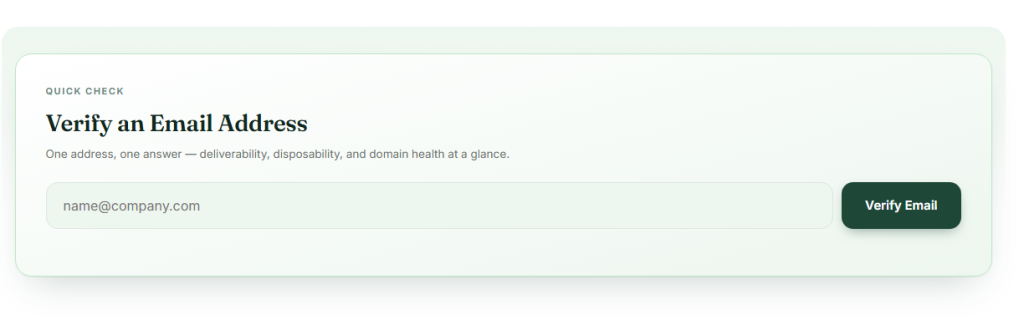
Verification does not guarantee delivery, establish consent, or prove that an address belongs to the intended decision-maker.
Results should be considered alongside source quality and other checks.
Use real-time email validation
Companies collecting email addresses through registration forms, quotation requests, or other online workflows may benefit from checking data as it enters their systems. This can help identify formatting errors and some invalid addresses before they reach the CRM.
LeadCanal Email Verification API provides further information about incorporating email validation into digital workflows.
Enrich incomplete contact records
Data enrichment may involve adding company details, correcting business information, or completing permitted missing fields. Its effectiveness depends on the source and the reliability of the information being added.
Companies should document where their contact data comes from and review important changes before relying on those records in sales campaigns.
7. Segmenting Business Owner Leads
Segmentation allows businesses to organize contacts into groups with shared characteristics. It can also make outreach more relevant to the needs of different audiences.
Segment by industry
Group prospects into sectors such as retail, manufacturing, technology, consulting, and financial services. Each group may require a different value proposition and set of examples.
For instance, businesses researching manufacturing technology prospects can explore the Semiconductor Industry Email List to understand how industry-specific audiences differ from general business owner contacts.
Segment by company size
Small businesses, growing companies, and larger organizations often have different purchasing processes. Segmenting by company size can help teams prioritize prospects and adapt their messaging.
Segment by geography
Geographic segmentation can help businesses account for service availability, regional markets, language, and applicable legal requirements. Confirm that each campaign is appropriate for the recipients’ locations.
For example, companies targeting businesses in the travel sector can explore LeadCanal Travel Agencies Email List as a related industry-specific resource.
Segment by business needs
Where reliable information supports it, group businesses according to the problems your product or service addresses. A company offering supply-chain software, for example, may prioritize businesses with relevant distribution or logistics operations.
The goal is not to create as many segments as possible. Each group should have a clear purpose and a relevant communication strategy.
8. B2B Outreach Strategies for Business Owners
A contact list is most useful when it supports relevant, respectful business communication.
Research prospects before contacting them
Review the company’s website, products, services, and market. Identify a genuine reason your offering may be relevant instead of sending the same message to every business owner.
Write a clear value proposition
Explain what your product does, which business problem it addresses, and why the recipient’s organization might benefit. Avoid unsupported claims and exaggerated promises.
Personalize your outreach
Use accurate company information to make messages more relevant. Personalization should reflect genuine research rather than assumptions about the recipient’s business or circumstances.
Businesses developing a repeatable outbound process can refer to LeadCanal Cold Email Outreach for related guidance.
Measure meaningful campaign results
Track qualified replies, meetings, conversions, delivery failures, complaints, and opt-out requests. These measures provide more useful feedback than simply counting the number of messages sent.
Use the results to refine your audience, messaging, and follow-up approach. Avoid repeatedly contacting recipients who have opted out or indicated that they do not want further communication.
9. Common Mistakes to Avoid
Buying a list without checking its source
A provider’s marketing claims do not automatically prove that every record is accurate, current, or suitable for your campaign. Review sourcing practices, available documentation, update frequency, and permitted uses.
Treating verification as proof of consent
Technical email verification and permission to send marketing communications are separate matters. A deliverable address does not automatically authorize promotional outreach.
Using the same message for every prospect
Different businesses have different goals and challenges. Generic messages may be less relevant even when the contact details are accurate.
Ignoring outdated information
Company names, websites, professional roles, and email addresses can change. Establish a reasonable review schedule based on the type of information and how frequently it changes.
Neglecting data protection
Contact records should be handled responsibly, stored securely, and used only for appropriate purposes. Businesses should also respect opt-out requests and maintain suppression records where required.
10. Privacy and Responsible Data Use
Business contact information can identify individuals, so it should be collected and used responsibly. Requirements depend on the source of the data, the intended purpose, the type of communication, and the applicable jurisdiction.
Businesses should document data sources, assess the lawful basis or permission requirements that apply, maintain appropriate opt-out processes, and provide required sender information. They should also review any restrictions imposed by their data providers.
For additional context, consult the US Federal Trade Commission’s CAN-SPAM Act Compliance Guide and the UK Information Commissioner’s Office guidance on direct marketing and electronic communications.
Businesses that need to assess sourcing and compliance considerations can also explore LeadCanal Compliant B2B Data Lists: Sourcing and Compliance Guide. The applicable rules should always be reviewed for the relevant countries and campaign type.
11. How LeadCanal Supports Business Prospecting
Effective B2B prospecting combines relevant audience research, organized contact records, appropriate data checks, and a clear outreach strategy.
LeadCanal provides resources related to business contact lists, email verification, data appending, data enrichment, and outbound communication.
These resources can help businesses understand the different components of a structured prospecting workflow.
Companies evaluating a business owner contact database should begin by defining their target audience and deciding which fields they need.
They can then evaluate available data sources, review contact quality, segment relevant prospects, and establish a process for measuring campaign outcomes.
Explore the LeadCanal website to review its available B2B contact and email-data resources and determine which options fit your organization’s requirements.
The best approach prioritizes contact relevance, data quality, transparency, and responsible use rather than promising a specific number of leads or guaranteed campaign results.
12. Frequently Asked Questions
What is an Email List of Business Owners?
It is a collection of business-related contact records associated with people who own or operate companies. Depending on the source, it may include names, professional email addresses, company details, industries, and locations.
How can businesses use business owner email lists?
Depending on the source and permitted use, businesses may use these lists for prospect research, audience segmentation, account identification, and relevant B2B communication.
What makes a business owner contact database useful?
Useful characteristics include relevant contacts, accurate company information, clear data provenance, appropriate verification, reasonable freshness, and suitability for the intended purpose.
How can I improve business owner email data quality?
Use reputable sources, review contact and company information, remove duplicates, verify email addresses, and maintain an ongoing data review process.
Is an email address that passes verification safe to use for marketing?
Not automatically. Verification assesses technical signals, not every legal or permission requirement. Businesses must separately consider data sourcing, applicable marketing rules, and opt-out obligations.
How should I segment business owner contacts?
Useful criteria include industry, geography, company size, business type, professional role, and a documented reason the company may benefit from your offering.
How often should a business owner database be updated?
There is no universal schedule. Review frequency should reflect the source, the rate at which the information changes, and the importance of accuracy to your campaign.
Conclusion
An Email List of Business Owners can support B2B prospecting when it contains relevant information and is used as part of a thoughtful sales and marketing strategy.
Businesses should focus on accurate records, meaningful segmentation, appropriate verification, and outreach that reflects the recipient’s business needs.
A well-managed contact database is not simply a collection of email addresses. It is a working resource that helps teams research prospects, organize business information, and make informed decisions about their next steps.
LeadCanal resources on B2B contact data, email verification, and data enrichment can help businesses explore the foundations of more organized prospecting.
By prioritizing relevance, responsible data use, and ongoing maintenance, organizations can build a stronger foundation for meaningful business conversations.
Editorial Policy
This article is intended for informational and educational purposes. Results depend on the relevance and quality of the data, the campaign approach, and other business factors.
No specific ranking, delivery rate, or lead-generation outcome is guaranteed.
Transparency Statement
Contact-data availability and verification outcomes vary by source and method. Businesses should review the provenance, accuracy, permitted use, and update practices of any data they intend to use.
About the Author
LeadCanal Editorial Team publishes educational content about B2B lead generation, business contact data, email verification, data quality, and targeted outreach.