Skip to content

How to Build a B2B Sales Pipeline That Converts: Complete Step-by-Step Guide
Direct Answer
A B2B sales pipeline that converts is built by creating a structured process that moves qualified prospects from initial awareness to becoming paying customers.
The most effective sales pipelines combine accurate prospect data, targeted lead generation, proper qualification, personalized outreach, consistent follow-ups, and performance tracking.
A successful B2B sales pipeline helps businesses generate predictable revenue, improve conversion rates, shorten sales cycles, and focus sales efforts on prospects with real buying potential.
How to Build a B2B Sales Pipeline That Converts
Building a reliable B2B sales pipeline is not about collecting thousands of contacts and hoping someone responds.
A pipeline works when every stage has a clear purpose: finding the right prospects, understanding their needs, building trust, and guiding them toward a purchase decision.
Many companies struggle with sales because they focus only on lead generation while ignoring qualification, follow-up, and pipeline management.
A complete sales pipeline creates a repeatable system where sales teams know who to contact, when to follow up, and how to improve conversions.
This guide explains how to build a B2B sales pipeline that converts and how businesses can optimize every stage for better results.
Table of Contents
- What Is a B2B Sales Pipeline?
- Why Is a B2B Sales Pipeline Important?
- What Are the Stages of a B2B Sales Pipeline?
- How to Build a B2B Sales Pipeline Step by Step
- How to Generate Qualified B2B Leads
- How to Qualify B2B Sales Prospects
- How to Improve B2B Sales Pipeline Conversion Rates
- Common Sales Pipeline Mistakes
- B2B Sales Pipeline Metrics to Track
- Frequently Asked Questions
What Is a B2B Sales Pipeline?
A B2B sales pipeline is a structured process that shows where potential customers are in the buying journey, from first interaction to final purchase.
Unlike a simple contact list, a sales pipeline tracks the progress of each prospect and helps sales teams understand which opportunities are most likely to convert.
A typical B2B sales pipeline includes:
- New prospects
- Qualified leads
- Sales conversations
- Meetings and demos
- Proposals
- Negotiations
- Closed deals
A well-managed pipeline gives businesses visibility into future revenue and helps sales teams prioritize the right opportunities.
Why Is a B2B Sales Pipeline Important?
A strong B2B sales pipeline allows businesses to create a predictable and measurable sales process.
The main benefits include:
Better Revenue Forecasting
Companies can estimate future sales based on active opportunities instead of relying on assumptions.
Higher Conversion Rates
A structured pipeline helps sales teams focus on qualified prospects instead of wasting time on poor-fit leads.
Improved Sales Efficiency
Sales representatives know exactly which prospects need attention and what action should happen next.
Shorter Sales Cycles
Clear processes reduce delays and help prospects move faster through the buying journey.

What Are the Stages of a B2B Sales Pipeline?
A B2B sales pipeline usually contains five major stages.
1. Lead Generation
The first stage involves finding potential customers who may need your product or service.
Common B2B lead sources include:
- Email outreach
- LinkedIn prospecting
- Content marketing
- Search campaigns
- Industry databases
- Referrals
Businesses need accurate prospect information to avoid wasting time contacting irrelevant companies.
Using verified business contacts improves outreach quality. LeadCanal provides targeted B2B contact databases that help businesses reach relevant decision-makers.
2. Lead Qualification
Not every lead is a potential customer.
Qualification helps sales teams identify prospects based on:
- Industry
- Company size
- Location
- Budget
- Buying authority
- Business requirements
Popular qualification frameworks include:
- BANT (Budget, Authority, Need, Timeline)
- MEDDIC
- CHAMP
Qualified leads create healthier pipelines because sales teams spend more time with prospects who have genuine buying intent.
3. Sales Outreach and Engagement
After identifying qualified prospects, businesses begin communication.
Effective B2B outreach requires:
- Personalized messaging
- Clear value proposition
- Relevant business solutions
- Professional follow-ups
Generic emails often receive poor engagement because they do not address the prospect’s specific challenges.
A successful outreach strategy focuses on helping prospects solve problems rather than simply promoting products.
4. Sales Opportunity Management
At this stage, prospects have shown interest and are actively considering your solution.
Sales teams should:
- Understand customer requirements
- Schedule meetings
- Provide demonstrations
- Answer objections
- Share relevant information
Proper opportunity management prevents potential customers from disappearing during the sales process.
5. Closing the Deal
The final stage involves converting an opportunity into a customer.
This usually includes:
- Proposal submission
-
Pricing discussion
- Negotiation
- Contract agreement
- Customer onboarding
A strong pipeline makes closing easier because prospects have already been properly qualified and nurtured.
How to Build a B2B Sales Pipeline Step by Step
Step 1: Define Your Ideal Customer Profile (ICP)
Before generating leads, clearly define who your ideal customer is.
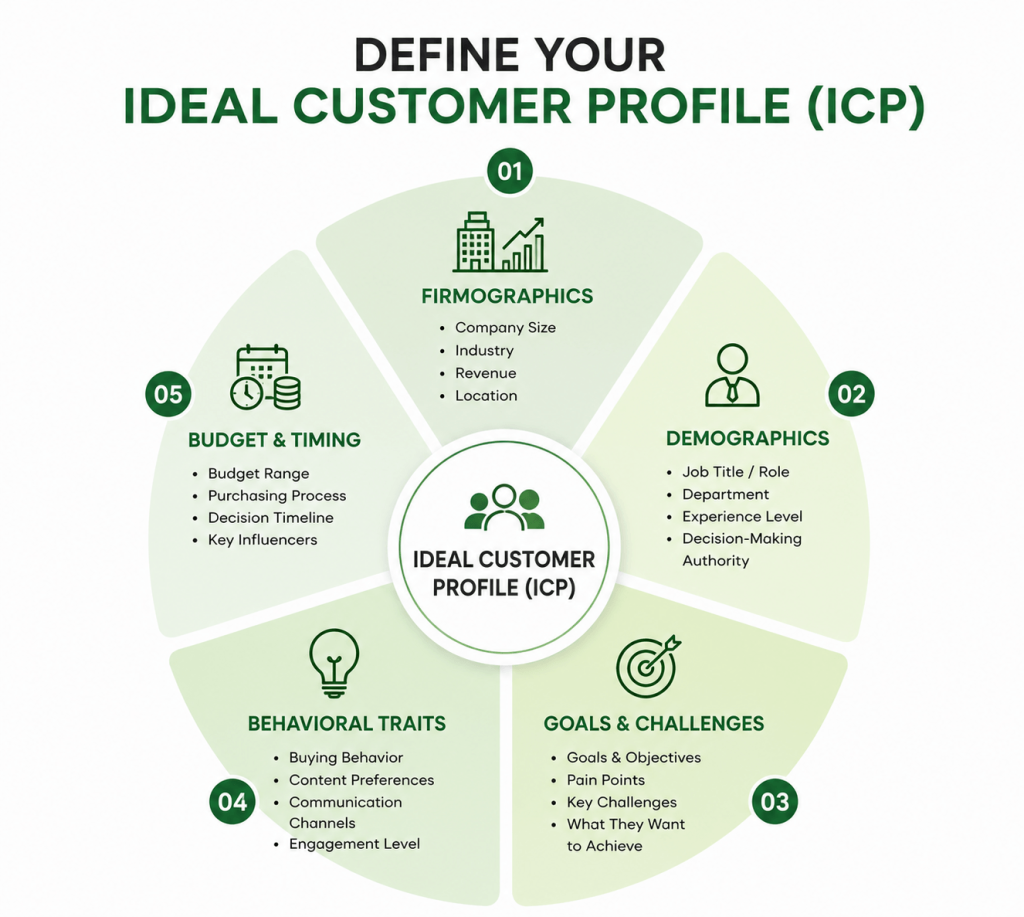
Your ICP should include:
- Industry
- Company size
- Revenue range
- Geographic location
- Decision-maker roles
- Common business challenges
For example, a software company targeting enterprises may focus on:
- CEOs
- CTOs
- IT Managers
- Operations Directors
A clear ICP improves targeting and increases conversion chances.
Step 2: Build a Targeted Prospect Database
A successful pipeline depends on accurate prospect information.
Your database should include:
- Company name
- Contact name
- Job title
- Business email
- Phone number
- Industry
- Location
Poor data quality creates:
- High bounce rates
- Wasted sales effort
- Lower response rates
Using verified contact data helps businesses improve outreach performance.
Step 3: Identify Decision Makers
B2B purchasing decisions usually involve multiple stakeholders.
Common decision-makers include:
- CEOs
- Founders
- Marketing Directors
- Sales Managers
- Procurement Managers
- Department Heads
Reaching the correct person increases the chance of starting meaningful sales conversations.
Step 4: Create a Personalized Outreach Strategy
Personalization is one of the biggest factors affecting B2B outreach success.
Effective outreach includes:
- Prospect research
- Personalized opening lines
- Relevant business benefits
- Clear call-to-action
A good sales email should answer:
- Why are you contacting this person?
- What problem can you solve?
- Why should they respond?
Step 5: Create a Follow-Up System
Many B2B opportunities are lost because companies stop following up too early.
A simple follow-up sequence:
Day 1:
Initial outreach email
Day 3:
Follow-up with additional value
Day 7:
Share relevant case study or solution
Day 14:
Final follow-up message
Consistency improves response opportunities.
Step 6: Track and Optimize Pipeline Performance
A sales pipeline should always be measured.
Track:
- Number of leads generated
- Response rate
- Meetings booked
- Conversion rate
- Sales cycle length
- Revenue generated
Data helps identify weak stages and improve performance.
How to Improve B2B Sales Pipeline Conversion Rates?
Businesses can improve conversions by:

Improve Lead Quality
Target relevant companies and decision-makers instead of collecting random contacts.
Improve Email Deliverability
Proper email authentication improves inbox placement.
Important systems include:
Improve Sales Messaging
Focus on customer problems instead of product features.
Strong messaging explains:
- The problem
- The impact
- The solution
- The expected benefit
Common B2B Sales Pipeline Mistakes
1. Targeting Too Broad an Audience
Trying to sell to everyone usually results in weak engagement.
2. Ignoring Data Quality
Incorrect emails and outdated contacts reduce campaign performance.
3. No Follow-Up Process
Many opportunities disappear because companies fail to maintain communication.
4. Not Tracking Pipeline Metrics
Without measurement, businesses cannot improve their sales process.
B2B Sales Pipeline Metrics to Track
| Metric | Purpose |
|---|---|
| Lead volume | Measures prospect generation |
| Conversion rate | Shows pipeline effectiveness |
| Response rate | Measures outreach success |
| Sales cycle length | Shows deal speed |
| Win rate | Measures closing performance |
| Revenue per opportunity | Measures pipeline value |
Frequently Asked Questions
What is a B2B sales pipeline?
A B2B sales pipeline is a structured system that tracks prospects through different sales stages until they become customers.
How do you build a B2B sales pipeline?
You build a B2B sales pipeline by defining your ideal customer, generating qualified leads, contacting decision-makers, qualifying prospects, following up, and tracking results.
What makes a sales pipeline convert better?
A pipeline converts better when businesses use accurate data, personalized outreach, proper qualification, and consistent follow-ups.
How important is lead quality in B2B sales?
Lead quality is extremely important because qualified prospects are more likely to engage, schedule meetings, and become customers.
What tools help manage a B2B sales pipeline?
Businesses commonly use CRM platforms, email outreach tools, lead databases, verification tools, and analytics systems.
Conclusion
Building a B2B sales pipeline that converts requires a complete system rather than random sales activities.
The strongest pipelines combine accurate prospect data, targeted lead generation, effective qualification, personalized outreach, and continuous optimization.
Businesses that invest in a structured sales process can improve conversion rates, create predictable revenue, and build stronger customer relationships.
Call To Action
LeadCanal helps businesses connect with targeted B2B prospects through verified contact databases and lead generation solutions.
With accurate data and better targeting, businesses can improve outreach campaigns, reach decision-makers faster, and build a stronger sales pipeline.