 Skip to content

Cold Email Personalization Guide in 2026: How to Create Relevant B2B Outreach That Gets Replies
Quick Answer
Cold email personalization in 2026 means creating outreach that reflects the prospect’s company, role, business situation, priorities, and likely needs.
Effective personalization goes beyond inserting a first name or company name.
It uses accurate research to explain why the prospect was selected, connects a relevant business signal to the sender’s offer, and gives the recipient a clear reason to reply.
The strongest personalized cold emails do not sound artificially friendly or overly familiar. They sound informed, professional, and commercially relevant.
For B2B companies, personalization can improve the quality of outreach because it helps the recipient understand three things immediately:
- Why they are being contacted
- Why the offer may be relevant
- What practical next step they can take
However, personalization alone cannot guarantee replies. Campaign performance also depends on audience quality, offer strength,
deliverability, timing, credibility, email copy, and follow-up strategy.
At LeadCanal, we help B2B companies build personalized cold email campaigns using qualified prospect research, verified contact data,
relevant messaging, structured follow-ups, and ongoing campaign optimization.
Table of Contents
- What Is Cold Email Personalization?
- Why Personalization Matters in 2026
- Personalized vs. Generic Cold Email
- Four Levels of Cold Email Personalization
- What Information Should You Research?
- Step-by-Step Cold Email Personalization Process
- Personalized Cold Email Templates
- Personalization at Scale
- Pros and Cons of Cold Email Personalization
- Practical B2B Campaign Example
- Real Screenshot Recommendations
- Common Personalization Mistakes
- Measuring Personalization Performance
- Privacy, Compliance, and Deliverability
- Frequently Asked Questions
- Conclusion
- Call to Action
What Is Cold Email Personalization?
Cold email personalization is the process of adapting an outreach message to a specific person, company, or clearly defined prospect segment.
A personalized email may use information about:
- The prospect’s role
- The company’s products or services
- Its customer base
- Its industry
- Company size
- Market expansion
- Hiring activity
- A newly launched service
- Technology used by the company
- A relevant business objective
- A public company announcement
- A likely challenge linked to the offer
The purpose of personalization is not to prove that the sender searched for the prospect online.
Its purpose is to create business relevance.
Consider this opening:
Hi David, I saw that you are the Sales Director at ABC Solutions.
This contains the prospect’s name, title, and company, but it does not explain why the email matters.
A more useful version would be:
Hi David, I noticed ABC Solutions recently expanded its managed IT services for healthcare companies.
That may create an opportunity to build a more focused outbound campaign targeting healthcare operations and technology leaders.
The second message connects a verified business development with a relevant outreach opportunity.
That is meaningful personalization.
Why Cold Email Personalization Matters in 2026
B2B decision-makers receive large volumes of automated outreach. Many messages use the same structure:
Hi [First Name],
I love what your company is doing.
We help companies grow.
Can we book a call?
This type of email often fails because it does not demonstrate audience understanding.
Personalization can help an email stand out by making it more specific, but the goal should not be to make automation invisible.
The goal should be to make the message useful.
A strong personalized email answers:
- Why was this company selected?
- Why is this person the right contact?
- What business signal created the outreach opportunity?
- How does the offer connect to that signal?
- What outcome may be relevant?
- What is the easiest next step?
Personalization also helps the sender qualify prospects before contacting them.
During research, LeadCanal may discover that a company is too small, serves the wrong market, already has an unsuitable business model, or does not have the relevant department.
This prevents unnecessary outreach and protects campaign quality.
Personalized vs. Generic Cold Email
| Factor | Generic Cold Email | Personalized Cold Email |
|---|---|---|
| Audience | Broad or loosely selected | Clearly defined and qualified |
| Opening | General introduction | Relevant company or role observation |
| Problem | Same for every prospect | Connected to the recipient’s situation |
| Value proposition | Broad service description | Outcome matched to the prospect |
| Research | Minimal | Verified company and prospect research |
| Call to action | Often asks for a meeting immediately | Matches the level of trust |
| Scalability | Easier to send in volume | Requires systems and quality control |
| Main risk | Irrelevance | Incorrect or intrusive personalization |
| Recipient impression | Mass automation | Purposeful business outreach |
| Best use | Highly uniform, qualified segments | Competitive or high-value B2B markets |
A personalized email is not automatically better. Poor research, incorrect assumptions, or forced compliments can make it worse than a clear generic message.
The quality of the personalization matters more than the number of personalized fields.
Four Levels of Cold Email Personalization
Level 1: Basic Personalization
Basic personalization uses standard contact fields such as:
- First name
- Company name
- Job title
- Location
- Industry
Example:
Hi Sarah, I am reaching out because you lead business development at Brightest.
This is the easiest form of personalization to automate.
Best use
It can work when the prospect list is highly focused and the same offer is relevant to almost every recipient.
Limitation
It does not provide a strong reason for the prospect to respond. Most modern campaigns already use these fields.
Level 2: Segment-Based Personalization
Segment-based personalization adapts the message to a group of similar prospects.
Segments can be created by:
- Industry
- Company size
- Revenue model
- Department
- Customer category
- Geography
- Technology
- Growth stage
- Service type
Example: Recruitment agencies serving healthcare companies often depend on referrals and existing relationships for new employer accounts.
This opening is not unique to one company, but it is relevant to a clearly defined market.
Best use
This approach is useful when many companies share the same problem and buying situation.
Limitation
The message may still feel broad if it does not include a company-specific reason for contact.
Level 3: Trigger-Based Personalization
Trigger-based personalization uses a verified business event.
Useful triggers include:
- New funding
- New location
- New leadership
- Market expansion
- Hiring activity
- Product launch
- Service launch
- Partnership announcement
- Website repositioning
- New customer segment
- Business acquisition
Example:
I noticed that [Company Name] recently launched a new cybersecurity service for financial businesses.
That creates a focused opportunity to approach compliance and technology leaders within that market.
Best use
Trigger-based personalization is especially useful when the event directly connects to the sender’s service.
Limitation
The trigger must be current, correct, and relevant. An outdated announcement can weaken trust.
Level 4: Account-Level Personalization
Account-level personalization involves deeper research into one company.
It may include:
- Reviewing the company’s website
- Studying its positioning
- Identifying target customers
- Examining current offers
- Reviewing public case studies
- Finding growth opportunities
- Creating a tailored campaign angle
- Drafting a short account plan
Example:
Your website positions your automation service mainly for manufacturing businesses,
but your published case studies also show experience with logistics companies.
A separate outbound campaign could test logistics operations directors without changing your main website positioning.
Best use
This level is suitable for high-value accounts, enterprise prospects, expensive services, and smaller target markets.
Limitation
It requires more time, better research skills, and strict quality control.
What Information Should You Research?
Good research focuses on information that improves the commercial relevance of the email.
Company-Level Research
Review:
- Main services
- Target customers
- Company size
- Market positioning
- Locations
- Recent announcements
- Job vacancies
- Team growth
- Technology stack
- Partnerships
- Case studies
- New offers
- Expansion plans
Prospect-Level Research
Review:
- Current position
- Department
- Likely responsibilities
- Time in the role
- Public professional comments
- Relevant interviews
- Previous experience
- Whether the person owns the problem
- Whether another role may be more suitable
Offer-Level Research
Before writing, determine:
- What problem LeadCanal can help address
- Why the problem may matter to this company
- Which outcome is most relevant
- What evidence supports the offer
- What call to action is appropriate
- Whether the timing makes sense
Avoid collecting information that has no professional relevance.
Personal details about family, relationships, appearance, hobbies, or unrelated social activity should not be used to create artificial familiarity.
Step-by-Step Cold Email Personalization Process
Step 1: Define a Narrow Ideal Customer Profile
Do not start with “all B2B companies.”
Create a focused profile using criteria such as:
- Industry
- Company size
- Location
- Business model
- Customer type
- Growth stage
- Service value
- Sales structure
- Current business signal
Example:
UK-based software consultancies with 20–100 employees that serve healthcare businesses and have an active sales team.
A narrow ideal customer profile makes every later stage more accurate.
Step 2: Select the Correct Decision-Maker
The correct decision-maker is the person most closely connected to the problem you solve.
| Campaign Goal | Likely Decision-Maker |
|---|---|
| Generate more sales meetings | Head of Sales, VP of Sales |
| Improve outbound prospecting | Sales Director, Business Development Director |
| Enter a new market | Founder, Chief Revenue Officer |
| Promote a new B2B service | Head of Growth, Marketing Director |
| Build partnerships | Partnerships Director |
| Outsource campaign execution | Founder, Sales Operations Lead |
Do not contact the most senior person automatically. Seniority does not always equal relevance.
Step 3: Find a Strong Personalization Signal
Choose one signal that explains why the prospect belongs in the campaign.
A useful signal should be:
- Accurate
- Recent
- Relevant
- Publicly available
- Connected to the offer
- Appropriate to mention
Weak signal:
I saw that you attended a business event.
Stronger signal:
I noticed that your company is hiring three business-development representatives for the North American market.
The stronger signal connects directly to sales expansion.
Step 4: Turn the Signal Into Business Relevance
Use this framework:
Observation → Business implication → Relevant offer
Example:
I noticed that [Company Name] is hiring new sales representatives in Germany.
As the team enters a new market, building a reliable list of local decision-makers may become a priority.
LeadCanal helps B2B teams create targeted prospect lists and personalized outreach campaigns for market expansion.
This structure prevents the personalization from becoming a random compliment.
Step 5: Write a Clear Value Proposition
Use this formula:
We help [specific audience] achieve [specific outcome] through [credible process].
Example:
LeadCanal helps B2B service companies generate qualified sales conversations through verified prospect research, personalized email copy, and structured follow-up sequences.
Avoid vague claims such as:
- Transform your business
- Unlock unlimited growth
- Revolutionize your pipeline
- Guarantee more sales
- Become an industry leader
The recipient should be able to understand exactly what the company does.
Step 6: Add Relevant Proof
Proof may include:
- A real client result
- A verified case study
- Relevant industry experience
- A sample campaign concept
- A practical observation
- A short audit
- A target-account recommendation
Example:
For a verified [industry] campaign, LeadCanal refined the audience from general business owners to [specific decision-maker], resulting in [verified outcome].
Use only genuine numbers and client-approved information.
Do not invent results to make the email look stronger.
Step 7: Choose a Low-Friction Call to Action
A cold prospect may not be ready for a meeting.
Useful calls to action include:
- Would a brief campaign outline be useful?
- Is this relevant to your current growth plans?
- May I send a sample sequence?
- Would you like to see the target-account criteria?
- Does someone else manage outbound sales?
- Should I reconnect next quarter?
The call to action should match the value already provided.
Step 8: Verify Every Detail
Before sending, check:
- Name spelling
- Current job title
- Company name
- Website
- Trigger event
- Location
- Personalization source
- Business relevance
- Grammar
- Remaining placeholders
- Accuracy of all claims
The message should remain accurate even if it is forwarded to another team member.
Personalized Cold Email Templates
Template 1: Market Expansion
Subject: Outreach for your [market] expansion
Hi [First Name],
I noticed that [Company Name] is expanding its services into [market or location].
As the team enters a new market, building a focused list of relevant decision-makers may become important.
LeadCanal helps B2B companies research qualified prospects, create personalized cold email sequences, and manage structured follow-ups.
Would a brief audience and messaging outline be useful?
Best,
[Sender Name]
LeadCanal
Template 2: New Service Launch
Subject: Outbound for [Service Name]
Hi [First Name],
I saw that [Company Name] recently introduced [Service Name] for [target audience].
Because the offer is designed for a specific market, it may be suitable for a focused campaign targeting [decision-maker type] experiencing [relevant challenge].
Would you like me to send a sample campaign angle?
Best,
[Sender Name]
Template 3: Hiring Trigger
Subject: Supporting your sales-team growth
Hi [First Name],
I noticed that [Company Name] is hiring additional business-development representatives.
As the team grows, maintaining consistent prospect research, personalization, and follow-up can require significant internal time.
LeadCanal helps B2B teams build and manage targeted cold email campaigns.
Is external outbound support currently relevant?
Best,
[Sender Name]
Template 4: Industry Segment
Subject: Client acquisition for [industry]
Hi [First Name],
Many [industry] companies rely heavily on referrals, partnerships, and existing networks to win new accounts.
LeadCanal helps B2B teams reach selected decision-makers through verified prospect research and personalized cold email campaigns.
Would it be useful to review a sample campaign for [target market]?
Best,
[Sender Name]
Template 5: High-Value Account
Subject: A campaign idea for [Company Name]
Hi [First Name],
I reviewed how [Company Name] positions [specific service] for [target market].
One possible outbound opportunity is to approach [decision-maker type] at [company category] with messaging focused on [business outcome].
I prepared a short outline covering the audience, positioning angle, and first-email structure.
May I send it?
Best,
[Sender Name]
Personalization at Scale
Personalization at scale should combine systems, automation, and human review.
Create Standard Research Fields
Useful fields may include:
- Industry
- Company size
- Main service
- Target customer
- Decision-maker
- Business trigger
- Relevant problem
- Suggested outcome
- Personalization source
- Verification status
This keeps research consistent across the team.
Build Reusable Message Modules
Create separate modules for:
- Hiring
- Expansion
- New service launch
- New market entry
- Different buyer roles
- Different industries
- Different company sizes
- Different objections
The sequence can remain structured while still reflecting the prospect’s situation.
Use Personalization Tiers
| Tier | Personalization Level | Suitable Prospects |
|---|---|---|
| Tier 1 | Full account research | High-value strategic accounts |
| Tier 2 | Trigger and segment research | Strong-fit mid-market accounts |
| Tier 3 | Role and industry personalization | Larger qualified lists |
| Tier 4 | Basic merge fields | Limited use without strong segmentation |
The amount of research should reflect the value and complexity of the opportunity.
Add Human Review
Manually check:
- High-value accounts
- AI-generated observations
- Unusual company triggers
- Custom opening lines
- Case-study references
- New campaign segments
- Emails containing financial or performance claims
Automation can increase speed, but it should not replace verification.
Pros and Cons of Cold Email Personalization
Pros
Higher relevance
The recipient can quickly understand why the message relates to their business.
Better prospect qualification
Research helps remove companies that do not fit the campaign.
Stronger positioning
Different benefits can be presented to founders, sales leaders, and marketing professionals.
More useful replies
Prospects may respond with specific information about timing, responsibility, needs, or existing solutions.
Better campaign learning
LeadCanal can identify which triggers, roles, industries, and value propositions produce the strongest conversations.
Cons
More research time
Deep personalization requires time and skilled researchers.
Risk of inaccurate information
Old announcements or incorrect role data can damage credibility.
Potential privacy concerns
Using unrelated or overly personal details can make the message uncomfortable.
Automation errors
AI and data tools can combine information from the wrong companies or misunderstand webpages.
Personalization cannot fix a weak offer
A customized email will still fail when the service is unclear, poorly positioned, or irrelevant.
Practical B2B Campaign Example
Consider a fictional cybersecurity consultancy targeting accounting companies.
Original Campaign
The consultancy sends the same email to founders, IT managers, office administrators, and finance directors:
We provide industry-leading cybersecurity solutions. Can we schedule a call?
Problems
- The audience is too broad.
- Different roles receive identical messaging.
- No company-specific reason is provided.
- “Industry-leading” is unsupported.
- The email does not identify a business situation.
- The call request appears before value is demonstrated.
Revised Strategy
LeadCanal divides the audience into two segments.
Segment A: Accounting Firms Hiring IT Staff
The message discusses supporting security processes while the internal technology team expands.
Segment B: Firms Launching Cloud Accounting Services
The message focuses on access controls, cloud workflows, and staff processes.
Revised Email
Subject: Security processes at [Company Name]
Hi [First Name],
I noticed that [Company Name] is expanding its cloud accounting services for growing businesses.
As more client workflows move online, accounting firms often review access controls, staff practices, and how information moves between systems.
[Consultancy Name] helps accounting companies assess these processes and identify practical security priorities.
Would a brief checklist of the areas reviewed during an initial assessment be useful?
Best,
[Sender Name]
Why the Revised Email Is Stronger
- The company was selected for a clear reason.
- The message uses a verified service signal.
- It connects the signal to a relevant consideration.
- It does not claim the company has a security problem.
- The offer is industry-specific.
- The call to action provides value before requesting a meeting.
This example is illustrative. It should not be presented as a real LeadCanal client result.
Recommended Real Screenshots
Use only genuine LeadCanal screenshots.
Screenshot 1: Prospect Research Sheet
Show columns such as:
- Company name
- Industry
- Decision-maker
- Trigger
- Qualification reason
- Personalization line
- Information source
- Verification status
Suggested caption:
LeadCanal prospect research framework for personalized B2B outreach.
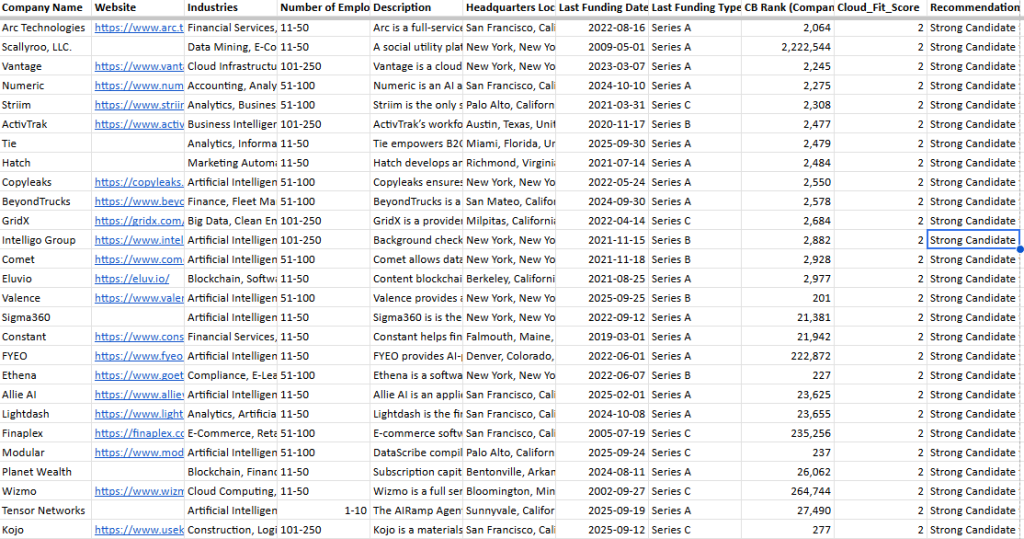
Blur names, email addresses, and confidential information.
Screenshot 2: Campaign Variables
Show real fields such as:
{{firstName}}{{companyName}}{{companyTrigger}}{{relevantProblem}}{{targetMarket}}
Suggested caption:

Personalization variables used within a LeadCanal cold email campaign.
Screenshot 3: Sequence Builder
Show:
- Subject line
- Email copy
- Variants
- Follow-up steps
- Templates
- Delay settings
Suggested caption:
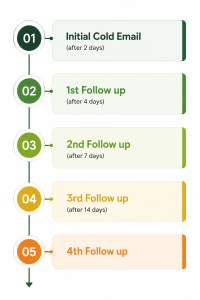
LeadCanal campaign sequence containing personalized emails and follow-ups.
Screenshot 4: Personalized Email Preview
Show one anonymized email with:
- Research signal
- Personalized opening
- Relevant value proposition
- Call to action
Suggested caption:

An anonymized personalized B2B cold email created from verified research.
Screenshot 5: Reply Categories
Show categories such as:
- Interested
- Referral
- Not now
- Existing provider
- Not relevant
- Opted out
Suggested caption:
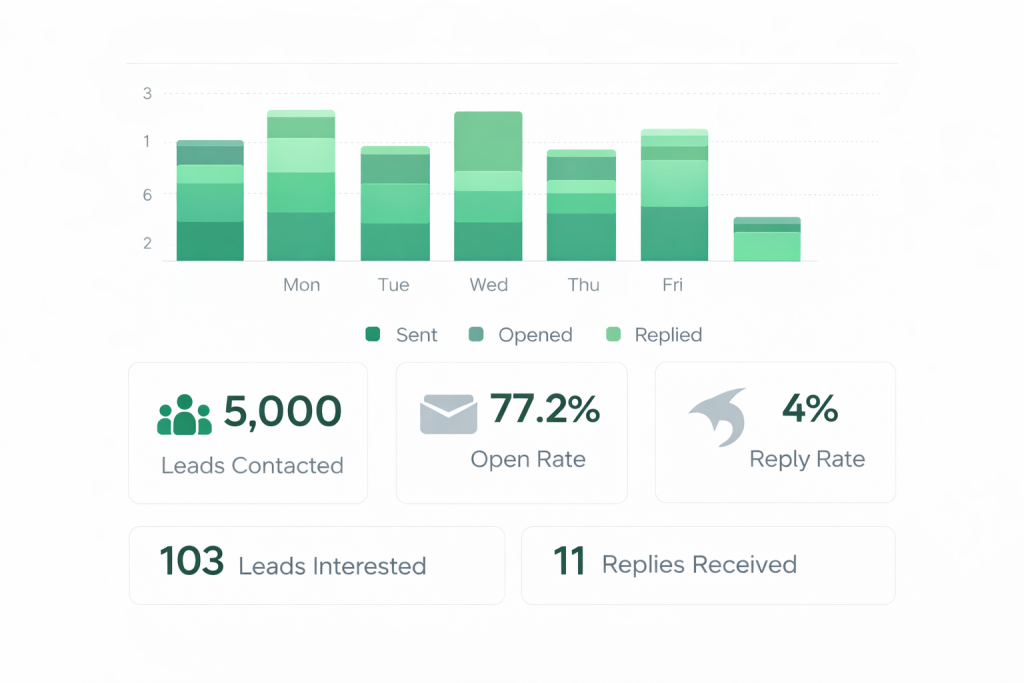
LeadCanal reply classification used to evaluate campaign relevance.
Common Personalization Mistakes
Avoid:
- Using only a first name
- Writing generic compliments
- Mentioning unrelated social posts
- Using outdated news
- Assuming the prospect has a problem
- Claiming to have reviewed a website without doing so
- Inventing triggers
- Leaving broken variables
- Using private information
- Copying one opening across unrelated industries
- Adding research that does not connect to the offer
- Trusting AI-generated facts without verification
- Making the opening personal while keeping the offer generic
- Writing long paragraphs to prove research was completed
- Using false familiarity
Professional relevance is more valuable than artificial closeness.
Measuring Personalization Performance
Track more than open rates.
Useful metrics include:
| Metric | What It Helps Measure |
|---|---|
| Delivery rate | Technical campaign performance |
| Bounce rate | Contact-data quality |
| Total reply rate | Overall response activity |
| Positive reply rate | Genuine interest |
| Referral rate | Decision-maker accuracy |
| Negative reply rate | Audience or offer problems |
| Meetings booked | Qualified sales activity |
| Opportunities created | Pipeline impact |
| Opt-out rate | Audience resistance |
| Replies by segment | Personalization relevance |
| Replies by trigger | Best-performing research signals |
A campaign with fewer replies but more qualified opportunities may be stronger than one with many low-quality responses.
Review performance by:
- Industry
- Company size
- Job title
- Personalization tier
- Trigger type
- Value proposition
- Call to action
- Email sequence step
This helps LeadCanal identify which forms of personalization create genuine commercial value.
Privacy, Compliance, and Deliverability
Personalization does not remove the need for responsible outreach.
Campaigns should use:
- Accurate sender information
- Verified email addresses
- Appropriate email authentication
- Controlled sending activity
- Bounce monitoring
- Complaint monitoring
- Clear opt-out handling
- Suppression of opted-out contacts
- Honest subject lines
- Responsible data collection
Legal requirements differ across countries and recipient types.
Businesses should review the rules applying to:
- The sender’s location
- The recipient’s location
- The type of recipient
- The source of contact data
- The commercial purpose
- Data storage and processing
- Opt-out requirements
LeadCanal and its clients should obtain qualified legal advice where necessary.
Personalization should remain professional and proportionate. A business email does not require collecting unnecessary information about the recipient.
Frequently Asked Questions
1. What is cold email personalization?
Cold email personalization is the process of adapting an outreach message to the recipient’s role, company, business context, and relevant needs.
2. Is using a first name enough?
No. A first name is a basic merge field. Strong personalization explains why the prospect was selected and how the offer relates to their work.
3. What are the best personalization signals?
Useful signals include hiring activity, market expansion, new services, partnerships, new locations, customer-segment changes, and other verified business developments.
4. How much research should be completed?
The research level should match the value of the account, complexity of the service, target-market size, and campaign objective.
5. Can AI personalize cold emails?
AI can help organize research and draft variations. Every company fact, claim, and personalization detail should still be manually verified.
6. Should I mention LinkedIn posts?
Only when the post is professionally relevant and connects naturally to the offer. Avoid unrelated personal information.
7. How can cold emails be personalized at scale?
Use segmented prospect lists, structured research fields, reusable message modules, account tiers, verified triggers, and human review.
8. Does personalization guarantee replies?
No. Results also depend on targeting, offer quality, timing, deliverability, credibility, follow-ups, and market demand.
9. Can personalization improve deliverability?
Relevant messaging may reduce negative reactions, but it does not replace authentication, list verification, controlled sending, and proper technical setup.
10. Can LeadCanal manage personalized cold email campaigns?
LeadCanal helps B2B companies with ideal customer profiling, prospect research, email verification, personalized copywriting, sequence creation, follow-ups, reply analysis, and campaign optimization.
Conclusion
Cold email personalization in 2026 should be based on accurate business relevance rather than decorative details.
A strong personalized cold email:
- Targets a qualified company
- Selects the correct decision-maker
- Uses an accurate business signal
- Connects that signal to a realistic need
- Presents a clear value proposition
- Includes relevant evidence
- Uses an appropriate call to action
- Respects privacy and opt-out requests
- Is reviewed before sending
- Is measured through qualified outcomes
The best campaigns do not attempt to hide automation. They use technology to support better research, stronger segmentation, and more useful communication.
For improved visibility in traditional and AI-powered search, LeadCanal should publish this guide with genuine screenshots,
original campaign experience, accurate author information, descriptive headings, internal links, updated examples, and client-approved evidence.
No article can guarantee search ranking, inclusion in AI-generated answers, or qualified replies.
However, useful content supported by real experience gives both readers and search systems stronger reasons to trust the page.
Build Personalized B2B Campaigns With LeadCanal
Generic outreach can waste prospect data, reduce trust, and create poor-quality replies.
LeadCanal helps B2B companies build personalized cold email campaigns using qualified targeting,
verified prospect research, relevant copywriting, structured follow-ups, and performance-based optimization.
Contact LeadCanal today to develop a personalized outreach strategy based on your ideal customers, target market, offer, and sales objectives.


