Cold Email Agency vs In-House Outreach: Which Is Better for B2B Growth?
Quick Answer
Cold email agency vs in-house outreach depends on your company’s resources, sales goals, expertise, and campaign volume.
A cold email agency is usually the better option when a business needs faster execution, specialized deliverability knowledge,
prospect research, copywriting, campaign infrastructure, and ongoing optimization without building an entire internal team.
In-house outreach may be better when the company already has experienced sales-development staff, mature processes, reliable data sources,
and enough campaign volume to justify the fixed cost.
A hybrid approach internal sales ownership supported by a specialist agency is often the most practical choice for growing B2B companies.
The right decision is not simply about whether an agency is cheaper than hiring an employee.
It is about which model can consistently create qualified sales conversations while protecting your domain reputation, brand voice, data quality, and team capacity.
A company may employ an internal sales representative but still lack expertise in:
- Ideal customer profile development
- Prospect-list building
- Email verification
- Deliverability setup
- Cold email copywriting
- Personalization
- Follow-up sequencing
- Reply classification
- A/B testing
- Campaign reporting
A specialist provider such as LeadCanal can manage these campaign components while the client’s internal sales team focuses on qualified replies,
discovery calls, proposals, and closing opportunities.
This guide compares cold email agencies and in-house outreach across cost, control, speed, expertise, scalability,
risks, artificial-intelligence visibility, and long-term business value.
Table of Contents
- What Is a Cold Email Agency?
- What Is In-House Cold Email Outreach?
- Cold Email Agency vs In-House Outreach Comparison
- When an Agency Is the Better Choice
- When In-House Outreach Is the Better Choice
- Pros and Cons of Each Model
- Cost Considerations
- Step-by-Step Decision Process
- Agency, In-House, or Hybrid?
- Practical B2B Example
- Performance Metrics to Compare
- Real Screenshot Recommendations
- AEO, GEO, and AI Search Visibility
- Common Mistakes
- Frequently Asked Questions
- Conclusion
- Call to Action
What Is a Cold Email Agency?
A cold email agency is a specialist service provider that helps businesses plan,
build, launch, manage, and optimize outbound email campaigns.
Depending on its scope, an agency may provide:
- Ideal customer profile research
- Prospect segmentation
- Contact-data collection
- Email verification
- Sending-domain guidance
- Mailbox setup
- SPF, DKIM, and DMARC coordination
- Campaign copywriting
- Personalized opening lines
- Follow-up sequences
- Campaign scheduling
- A/B testing
- Reply classification
- Reporting and optimization
The agency does not replace the client’s complete sales function.
Its primary responsibility is normally to help create qualified conversations.
The client still needs a clear offer, suitable pricing, credible proof, a professional sales process, and someone capable of handling interested prospects.
At LeadCanal, cold email outreach can be positioned as a structured lead-generation service rather than a simple volume-sending activity.
That distinction matters because sending more emails is not the same as creating more valuable opportunities.
What Is In-House Cold Email Outreach?
In-house outreach means a company manages the cold email process using its own employees, systems, data sources, and infrastructure.
An internal outreach operation may involve:
- A sales development representative
- A list-building researcher
- A copywriter
- A sales operations specialist
- A deliverability specialist
- A sales manager
- An account executive
In a small company, one person may perform several of these roles.
In a larger organization, each responsibility may be assigned to a separate team member.
The main advantage of an in-house model is direct control.
Employees are usually closer to the company’s product, customers, brand, sales conversations, and market knowledge.
However, control only becomes valuable when the internal team has enough time and expertise to manage the system properly.
An employee who understands the product but has no deliverability knowledge may still create poor campaign results.
Similarly, an experienced salesperson may not have the research capacity to build accurate prospect lists every week.
Cold Email Agency vs In-House Outreach Comparison
| Factor | Cold Email Agency | In-House Outreach |
|---|---|---|
| Setup speed | Usually faster because systems already exist | Slower if staff and processes must be built |
| Initial investment | Service fee and campaign setup | Recruitment, salaries, tools, training, and management |
| Expertise | Access to multiple campaign specialists | Depends on the experience of internal employees |
| Control | Shared between client and agency | High internal control |
| Product knowledge | Requires client onboarding | Usually stronger from the beginning |
| Scalability | Capacity can often be increased faster | May require additional hiring |
| Deliverability knowledge | Often included as a specialist skill | Must be developed or hired internally |
| Prospect research | Usually managed as part of the service | Requires staff time and data tools |
| Copy testing | Can use established testing processes | Depends on team discipline |
| Reporting | Often standardized | Can be customized deeply |
| Brand alignment | Requires clear guidelines and approval | Easier to maintain internally |
| Long-term knowledge | Some knowledge stays with the agency | Knowledge remains within the company |
| Management burden | Lower for the client | Higher internal management requirement |
| Best fit | Companies needing speed and specialist execution | Companies with mature outbound operations |
| Main risk | Choosing a low-quality provider | Underestimating the resources required |
Neither model is automatically superior. The best choice depends on the company’s current operational maturity.
When a Cold Email Agency Is the Better Choice
1. You Need to Launch Quickly
Building an internal outreach team can involve recruiting, interviewing, onboarding, purchasing tools, creating processes, and training staff.
A specialist agency may already have:
- Campaign frameworks
- Research processes
- Copywriting systems
- Quality-control checklists
- Reporting templates
- Technical knowledge
This can reduce the time between strategy and campaign launch.
Speed should not mean skipping research or deliverability preparation.
It means using an established process instead of designing every component from the beginning.
2. Your Team Lacks Cold Email Expertise
Cold email requires several different skills.
A company may understand its customers but lack experience in:
- Writing short outreach messages
- Building follow-up sequences
- Selecting relevant personalization
- Verifying prospect data
- Monitoring bounce patterns
- Interpreting reply quality
- Testing message variations
An agency can provide access to several capabilities through one engagement.
3. Your Sales Team Needs More Time for Selling
Sales representatives should not necessarily spend most of their day finding email addresses,
cleaning spreadsheets, reviewing domains, and writing campaign variants.
When an agency manages campaign preparation and execution, the internal sales team can focus on:
- Responding to interested prospects
- Conducting discovery calls
- Qualifying opportunities
- Preparing proposals
- Following active deals
- Closing business
This separation can make the sales process more efficient.
4. You Want to Test a New Market
Hiring a complete internal team before validating a market can create unnecessary fixed costs.
An agency-supported campaign can test:
- A new country
- A new industry
- A different decision-maker
- A newly launched service
- A revised value proposition
- A new customer segment
The results can help the company decide whether to invest more heavily in that market.
5. You Need Flexible Capacity
Campaign workload can change.
A business may need a larger prospect list during a product launch but less outreach during a seasonal slowdown.
An agency can often adjust its output more easily than a company can repeatedly hire and reduce internal staff.
When In-House Outreach Is the Better Choice
1. You Already Have a Mature Sales-Development Team
In-house outreach may be more efficient when the company already has:
- Experienced SDRs
- A trained sales manager
- Reliable data sources
- Defined campaign procedures
- Deliverability expertise
- Strong reporting systems
- Consistent campaign volume
In this situation, outsourcing the complete function may create unnecessary duplication.
2. The Offer Requires Deep Technical Knowledge
Some products require detailed industry or technical knowledge before a meaningful email can be written.
Examples may include:
- Complex enterprise software
- Specialized engineering services
- Regulated professional services
- Highly technical consulting
- Custom industrial solutions
An internal specialist may understand customer terminology and objections more naturally than an external writer.
An agency can still contribute, but closer collaboration and a detailed onboarding process become essential.
3. Brand Control Is the Highest Priority
Companies operating in reputation-sensitive markets may prefer every message to be written and approved internally.
This allows the organization to control:
- Tone
- Claims
- Terminology
- Legal language
- Target accounts
- Offer positioning
- Follow-up decisions
However, strong brand control requires clear internal review procedures.
Without them, in-house campaigns can still become inconsistent.
4. Outreach Volume Is Consistent and Large
A company running substantial campaigns throughout the year may eventually find it economical to build permanent internal capabilities.
The decision should be based on total operational cost, not salary alone.
Internal cost may include:
- Recruitment
- Salaries
- Benefits
- Management time
- Software subscriptions
- Data subscriptions
- Training
- Employee turnover
- Deliverability support
- Quality assurance
Pros and Cons
Cold Email Agency: Pros
Faster implementation
An experienced agency already understands the main campaign stages and does not need to build every process from zero.
Specialist skills
The client can access research, copywriting, campaign management, and technical knowledge without hiring separate employees.
Flexible scaling
Campaign capacity can often be increased or reduced according to business priorities.
External perspective
An agency may identify new markets, message angles, and customer segments that the internal team has overlooked.
Reduced management pressure
The client manages one external partner rather than recruiting and supervising several campaign roles.
Cold Email Agency: Cons
Less direct control
The company must rely on the agency to follow its targeting, tone, and brand requirements.
Onboarding is necessary
The provider needs sufficient information about the offer, customers, proof, and sales process.
Service quality varies
Some providers focus on volume rather than relevance, which can damage campaign quality.
Knowledge may remain external
If processes are not documented, the client may become dependent on the agency.
In-House Outreach: Pros
Greater product understanding
Internal employees often know the company’s service, terminology, and customer objections more deeply.
Full process control
The company controls data sources, targeting, copy, sending decisions, and campaign changes.
Strong internal learning
Campaign insights can be shared directly with sales, marketing, product, and leadership teams.
Long-term capability
A well-managed in-house team becomes a permanent business asset.
In-House Outreach: Cons
Higher fixed costs
Salaries, tools, management, recruitment, and training continue even when campaign volume falls.
Slower setup
Building a reliable team and process can take significant time.
Multiple skills are required
One SDR may not be an expert researcher, copywriter, analyst, and deliverability specialist.
Employee turnover
When key staff leave, campaign knowledge and output can be disrupted.
Cost Considerations
The true comparison is not:
Agency fee versus one employee’s salary.
A more accurate evaluation includes the complete cost of each model.
| Cost Category | Agency Model | In-House Model |
|---|---|---|
| Strategy | Often included | Manager or consultant cost |
| Recruitment | Usually not required | Hiring and interview cost |
| Salaries | Replaced by service fee | Recurring employee salaries |
| Training | Managed by agency | Internal training cost |
| Prospect data | May be included or separate | Data subscriptions |
| Outreach software | May be included or separate | Multiple software subscriptions |
| Copywriting | Usually included | Employee or freelancer |
| Deliverability | Often included in scope | Internal or external specialist |
| Management | Client relationship management | Daily team supervision |
| Replacement risk | Provider can reassign staff | Recruitment required after turnover |
A company should compare cost per qualified opportunity rather than focusing only on monthly expenditure.
A more expensive system may be better when it produces higher-quality conversations and requires less internal time.
Step-by-Step Decision Process
Step 1: Define the Campaign Objective
Decide what outreach must achieve.
Possible objectives include:
- Booking qualified discovery calls
- Entering a new market
- Promoting a new service
- Reaching channel partners
- Building a referral network
- Validating a new customer segment
A vague objective such as “get more leads” makes it difficult to compare options.
Step 2: Audit Internal Resources
List what your team already has.
Review:
- Sales staff
- Research capacity
- Copywriting experience
- Data tools
- Email infrastructure
- Deliverability knowledge
- Campaign-management time
- Reporting capability
- Sales follow-up capacity
Separate confidence from evidence. A team may believe it understands cold email without having a repeatable campaign process.
Step 3: Calculate Total In-House Cost
Include:
- Salary and benefits
- Recruitment
- Software
- Data
- Training
- Management hours
- Deliverability support
- Lost productivity
- Employee replacement
Calculate at least a six- or twelve-month period rather than comparing one monthly figure.
Step 4: Evaluate Agency Capability
Ask potential agencies:
- How do you build prospect lists?
- How is email data verified?
- Who writes the copy?
- How do you personalize campaigns?
- How are replies classified?
- What metrics are reported?
- Who owns the campaign data?
- What happens when a prospect opts out?
- How do you prevent unsupported claims?
- How are campaigns improved over time?
Avoid selecting a provider based only on the number of emails promised.
Step 5: Review Sales Capacity
More replies are useful only when the company can respond quickly and professionally.
Confirm that someone can:
- Review replies
- Qualify prospects
- Book calls
- Conduct meetings
- Prepare proposals
- Follow open opportunities
Do not outsource lead generation while ignoring the process that converts replies into revenue.
Step 6: Run a Controlled Test
Use a defined pilot period with:
- One clear ideal customer profile
- One offer
- A limited number of segments
- Approved messaging
- Measurable success criteria
The test should measure reply quality, not just sending volume.
Step 7: Choose the Operating Model
Select:
- Fully agency-managed
- Fully in-house
- Hybrid operation
The chosen model should match the company’s present stage, not an imagined future structure.
Agency, In-House, or Hybrid?
For many B2B businesses, a hybrid approach provides the strongest balance.
A practical hybrid structure
LeadCanal manages:
- Prospect research
- Contact verification
- Campaign copy
- Sequence setup
- Personalization
- Campaign monitoring
- Testing
- Reporting
The client manages:
- Offer approval
- Brand guidelines
- Positive replies
- Sales calls
- Proposals
- Closing
- Customer feedback
This model keeps specialist campaign work with the agency while preserving internal ownership of customer relationships.
Practical B2B Case Example
Consider a fictional software-development company targeting logistics businesses.
Situation
The company has two account executives but no dedicated SDR, researcher, or outreach specialist.
Its account executives spend several hours each week:
- Searching for companies
- Finding contact information
- Writing emails
- Following up manually
- Updating spreadsheets
This reduces the time available for sales calls and proposals.
In-House Option
The company considers hiring:
- One SDR
- One part-time researcher
- A freelance copywriter
It would also need prospecting, verification, sequencing, CRM, and reporting tools.
The model provides strong control, but setup requires recruitment, training, and management.
Agency Option
The company works with a specialist outreach agency.
The campaign is divided into:
- Regional logistics providers
- Warehousing businesses
- Freight-management companies
Different messages are created for operations directors and technology leaders.
The internal account executives handle only interested and relevant replies.
Likely Strategic Outcome
The agency model may be more suitable for the initial test because the company needs speed and does not yet know whether the target segment will generate sufficient demand.
After validating the market, the business could:
- Continue with the agency
- Build an internal SDR function
- Move to a hybrid model
This example is illustrative. It should not be presented as an actual LeadCanal client result unless the details and outcomes are verified.
Metrics for Comparing Both Models
| Metric | Why It Matters |
|---|---|
| Valid contact rate | Measures research and data quality |
| Bounce rate | Reveals verification or infrastructure issues |
| Total reply rate | Shows overall response activity |
| Positive reply rate | Measures genuine interest |
| Qualified reply rate | Identifies sales-relevant conversations |
| Referral rate | Tests decision-maker accuracy |
| Meeting-booked rate | Measures conversion into calls |
| Opportunity rate | Connects outreach to pipeline |
| Cost per qualified opportunity | Compares financial efficiency |
| Time to launch | Measures operational speed |
| Internal hours required | Shows management burden |
| Opt-out rate | Indicates audience resistance |
| Replies by segment | Identifies the strongest market |
| Replies by sequence step | Shows which message creates engagement |
Open rates should not be treated as the main business outcome. Tracking limitations and privacy systems can make opens less reliable than direct replies and qualified conversions.
Recommended Real Screenshots
Use genuine screenshots from LeadCanal campaigns. Do not fabricate dashboards, performance figures, or client results.
Screenshot 1: Campaign Sequence Builder
Show:
- Initial email
- Follow-up steps
- Subject line
- Variables
- Delay settings
- Message variants
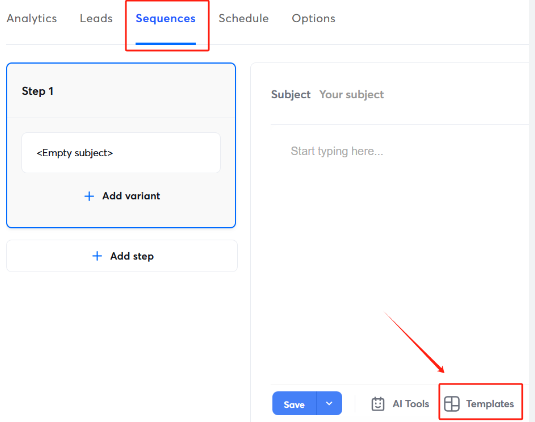
LeadCanal campaign sequence showing personalized initial outreach and structured follow-ups.
Highlight the variables section clearly so readers can understand how fields such as first name, company name, website, and personalization are inserted.
Screenshot 2: Prospect Research Sheet
Display anonymized fields such as:
- Company
- Industry
- Job title
- Qualification reason
- Personalization signal
- Verification status
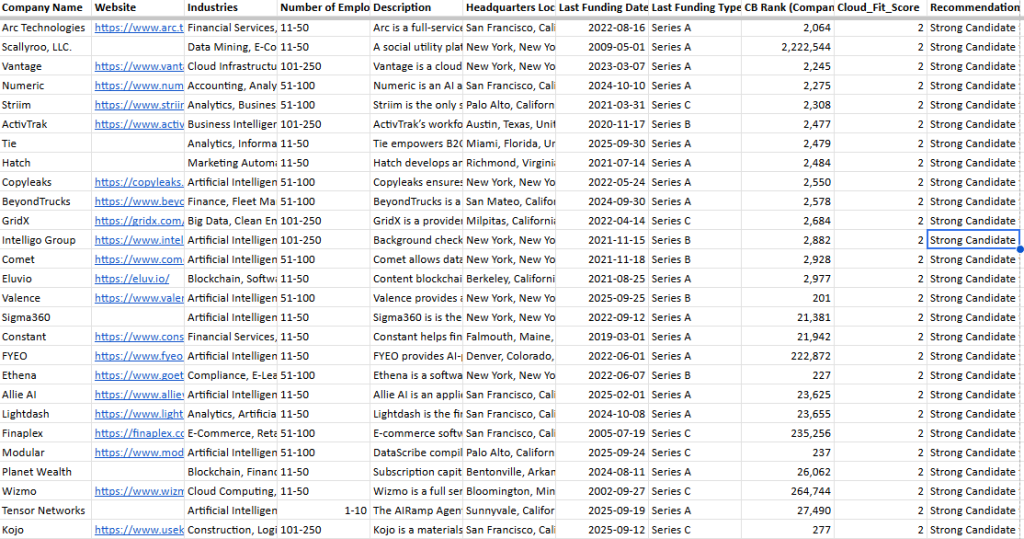
LeadCanal prospect-research process used to qualify B2B accounts before outreach.
Reply Classification
Show real categories such as:
- Interested
- Referral
- Not now
- Not relevant
- Existing provider
- Opted out
LeadCanal reply classification used to separate qualified opportunities from general responses.
Screenshot 4: Performance Comparison
Use verified figures to compare:
- Campaign segment
- Messages delivered
- Positive replies
- Meetings booked
- Opportunities created
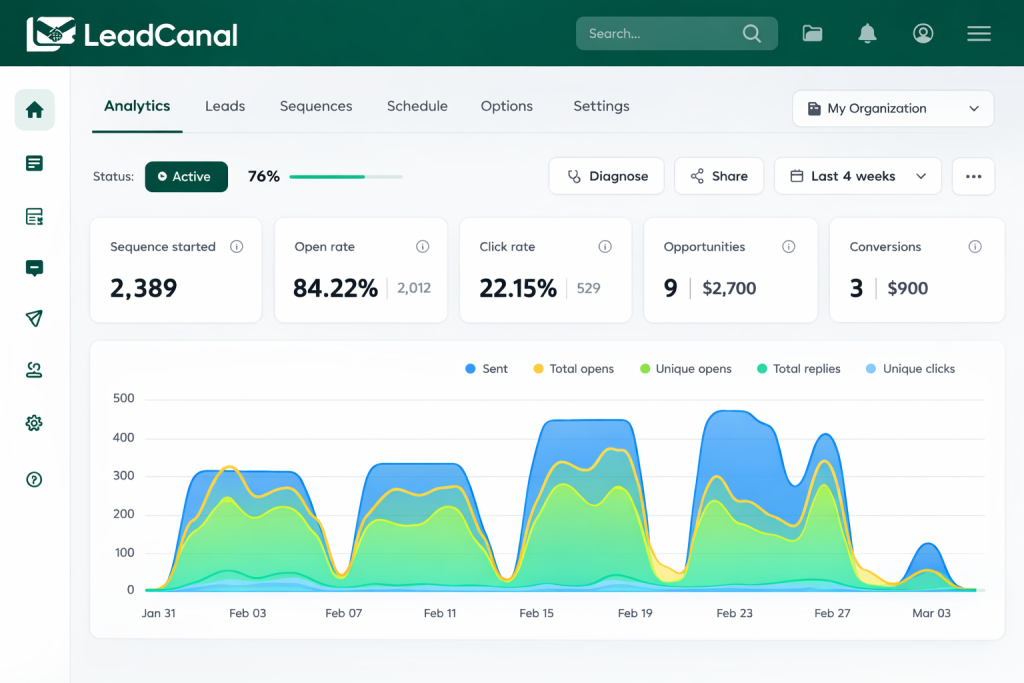
Anonymized LeadCanal campaign performance by target segment.
Include only data you can verify and are permitted to publish.
Common Mistakes to Avoid
- Choosing an agency based only on sending volume
- Hiring one employee and expecting them to perform every outreach role
- Launching before defining the ideal customer profile
- Using unverified prospect data
- Sending generic copy to unrelated segments
- Ignoring domain and mailbox preparation
- Measuring only open rates
- Continuing emails after an opt-out
- Inventing case-study results
- Failing to respond quickly to interested prospects
- Treating cold email as a replacement for a strong offer
- Allowing an agency to make unsupported claims
Frequently Asked Questions
1. Is a cold email agency better than an in-house team?
An agency is often better for companies needing speed, specialist knowledge, and flexible capacity.
An in-house team may be better for businesses with mature sales operations, consistent volume, and experienced staff.
2. Is outsourcing cold email cheaper?
It can be, particularly when the alternative requires several hires, software subscriptions, data sources, training, and management.
Compare total cost per qualified opportunity rather than monthly fees alone.
3. What does a cold email agency manage?
A full-service agency may manage ideal customer profiling, research, contact verification, copywriting, personalization, sequence setup, follow-ups, reporting, and campaign optimization.
4. Will an agency close sales for my company?
Usually, no. Most cold email agencies create and qualify conversations. The client normally manages discovery calls, proposals, negotiation, and closing.
5. Can an in-house employee manage the complete process?
One employee can manage a limited campaign, but research, copywriting, deliverability, analytics, and sales follow-up require different skills.
Quality may decline when one person is overloaded.
6. What is a hybrid cold email model?
A hybrid model combines agency execution with internal sales ownership.
The agency manages campaign operations, while the client handles interested replies and sales conversations.
7. How long should a campaign test run?
The correct period depends on the market, volume, sales cycle, and infrastructure.
The test should be long enough to evaluate multiple sequence steps and reply quality rather than judging performance after a few days.
8. What metrics should be used to evaluate an agency?
Review verified contacts, bounce rate, positive replies, qualified replies, meetings, opportunities,
opt-outs, campaign learning, and cost per qualified opportunity.
9. Can cold email support AI visibility?
Cold email itself does not directly create AI-search rankings. However, verified campaign experience, original data,
client-approved case studies, and useful content can strengthen the evidence and expertise presented on your website.
10. Can LeadCanal manage outsourced B2B outreach?
LeadCanal can support B2B companies with prospect research, verified contact data, personalized cold email copy
follow-up sequences, campaign management, reply analysis, and optimization, provided these descriptions accurately reflect its services.
Conclusion
The choice between a cold email agency and in-house outreach depends on operational readiness.
Choose an agency when your business needs:
- Faster execution
- Specialist campaign skills
- Lower internal management pressure
- Flexible capacity
- Market testing
- Support for an existing sales team
Choose in-house outreach when your company has:
- Experienced outbound staff
- Stable campaign volume
- Strong internal processes
- Technical and deliverability expertise
- Sufficient management capacity
- A long-term reason to own every campaign function
and Choose a hybrid model when you want specialist execution without giving up internal ownership of sales conversations and customer relationships.
The best solution is the one that produces qualified opportunities consistently,
protects your brand, uses accurate data, respects recipient preferences, and creates useful campaign intelligence.
Build Your B2B Outreach System With LeadCanal
Building an internal outbound department can require several hires, multiple tools, continuous training, and daily campaign management.
LeadCanal.com helps B2B companies create structured cold email campaigns through qualified prospect research,
verified data, professional copywriting, relevant personalization, strategic follow-ups, and ongoing optimization.
Contact LeadCanal to discuss whether an agency-managed, in-house, or hybrid outreach model is the right choice for your company.