Skip to content

Best Cold Email Subject Lines: 50 Professional Examples for B2B Outreach
The best cold email subject lines are short, specific, honest, and directly connected to the email’s content.
Effective examples include “Quick question about [Company Name],” “[Specific goal] at [Company Name],”
“Idea for your [business process],” and “Right person for [topic]?”
A strong subject line creates relevant curiosity without using click bait, false urgency, or misleading claims.
A subject line has one main job: help the right recipient understand why an email may be worth opening.
It cannot compensate for poor targeting, an irrelevant offer, inaccurate prospect data, or weak email deliverability.
However, when the audience and message are relevant, a clear subject line can support the first step toward a qualified business conversation.
In 2026, B2B buyers regularly receive automated outreach. Generic claims, excessive punctuation, fake reply prefixes, and artificial personalization can make an email appear untrustworthy.
The strongest approach is therefore not to create the most dramatic subject line. It is to create the most relevant and accurate one.
At LeadCanal, we help B2B companies develop targeted cold email campaigns built around qualified prospect data,
relevant messaging, professional follow-ups, and measurable sales opportunities.
Table of Contents
- What Makes a Good Cold Email Subject Line?
- Best Cold Email Subject Lines by Category
- Subject Line Comparison Table
- Step-by-Step Writing Process
- Pros and Cons of Common Subject-Line Styles
- Subject Lines to Avoid
- How to Test Cold Email Subject Lines
- Deliverability and Compliance
- Practical Campaign Example
- Recommended Real Screenshots
- Frequently Asked Questions
- Conclusion
- Call to Action
What Makes a Good Cold Email Subject Line?
A good cold email subject line gives the recipient an accurate preview of the message while creating enough relevance to encourage attention.
The strongest subject lines generally share five qualities.
1. Relevance
The subject should relate to the recipient’s role, company, market, objective, or business challenge.
For example:
Outbound pipeline at [Company Name]
This is more relevant than:
An exciting opportunity for you
The first example identifies a business topic. The second is vague and could describe almost anything.
2. Clarity
Recipients should not have to decode the subject line.
Avoid complicated wording, excessive abbreviations, or clever phrases that hide the purpose of the email.
A clear subject line is especially important when contacting busy executives who review messages quickly.
3. Accuracy
The subject line must accurately represent what appears in the email.
Do not write “Your account,” “Payment issue,” or “Urgent request” unless the message genuinely concerns that subject.
The US Federal Trade Commission states that commercial email subject lines must not be deceptive and should accurately reflect the content of the message.
4. Brevity
A short subject line is easier to scan, particularly on mobile devices. However, there is no universal character count that guarantees better results.
Remove words that do not add meaning, but do not sacrifice clarity merely to make the subject unusually short.
5. Natural language
A B2B subject line should sound like something a professional person would genuinely write.
Avoid:
- Excessive capital letters
- Repeated exclamation marks
- Unnecessary emojis
- Artificial urgency
- Sensational promises
- Fake familiarity
The objective is to begin a credible business conversation not to trick someone into opening a message.
Best Cold Email Subject Lines by Category
Replace all bracketed placeholders with accurate information before sending.
Short and Direct Subject Lines
These work well when the email body immediately explains the reason for contact.
- Quick question, [First Name]
- [Company Name] outreach
- A question about [process]
- Outbound at [Company Name]
- [Specific goal] at [Company Name]
- B2B growth question
- Your [department] pipeline
- A quick introduction
- Question about [service]
- [Company Name] and LeadCanal
“Quick question” should only be used when the message actually contains a brief and relevant question.
Personalized Subject Lines
These use genuine prospect information rather than generic personalization tokens.
- An idea for [Company Name]
- Regarding your [specific service]
- [Company Name]’s expansion
- Your work with [customer segment]
- Reaching more [target audience]
- Your [specific public initiative]
- [Service Name] growth opportunity
- About your [specific department]
- A thought on [business process]
- [Company Name]’s outbound strategy
Personalization should be based on verified facts. Mentioning a company launch, expansion, new service, or hiring activity without confirming it can damage credibility.
Problem-Focused Subject Lines
These are useful when the campaign targets a clearly defined operational or sales challenge.
- Improving outbound consistency
- Reducing reliance on referrals
- Reaching more decision-makers
- A more predictable B2B pipeline
- Prospecting capacity at [Company Name]
- Scaling outbound without hiring
- Improving [specific process]
- Building a qualified pipeline
- A question about lead quality
- Increasing sales conversations
The email body must explain the problem professionally.
Do not assume that every prospect is struggling or claim to know confidential details about their business.
Value-First Subject Lines
These work when the email provides a useful observation, resource, analysis, or campaign idea.
- Three outreach ideas for [Company Name]
- A campaign idea for [service]
- Suggested audience for [Company Name]
- A possible outbound angle
- Prospecting idea for [market]
- A brief [industry] analysis
- Target-account suggestion
- An idea for your sales team
- Possible positioning for [service]
- A B2B campaign outline
Only promise an analysis, plan, or resource when it is ready and genuinely useful.
Referral Subject Lines
These help when you are unsure whether the recipient owns the relevant responsibility.
- Right person for outbound?
- Who manages lead generation?
- Responsible for [business function]?
- Sales outreach contact
- Who oversees B2B growth?
- Correct contact for [topic]?
- Question for your sales team
- Outbound responsibility
- Business development contact
- Who handles prospecting?
Referral emails should make it easy for the recipient to respond with a name or redirect the sender.
Follow-Up Subject Lines
For follow-ups, continuing the original email thread is often clearer than inventing a completely unrelated subject.
Useful options include:
- Re: [Original Subject]
- Following up on [topic]
- One additional thought
- Should I close the loop?
- Still relevant this quarter?
- A final note about [topic]
- Reconnecting about [goal]
- Worth revisiting?
- Timing for [initiative]
- Should I contact someone else?
Do not use “Re:” in the first email to falsely imply that a previous conversation occurred.
Cold Email Subject Line Comparison
| Subject-Line Type | Example | Best Use | Main Risk |
|---|---|---|---|
| Direct | Outbound at [Company Name] | Clear, targeted offers | May feel generic without personalization |
| Question-based | Right person for outbound? | Finding the correct contact | Can be vague if the email lacks context |
| Personalized | Regarding your new [service] | Verified company trigger | Incorrect research harms trust |
| Problem-focused | Reducing reliance on referrals | Recognizable business challenge | May sound presumptive |
| Value-first | Three campaign ideas for [Company Name] | Offering useful insight | Must deliver the promised value |
| Curiosity-based | One thought about [process] | Starting a conversation | Can become clickbait |
| Result-focused | Building a qualified pipeline | Outcome-oriented service | Avoid guarantees or exaggerated results |
| Follow-up | One additional thought | Adding new information | Repetition can irritate recipients |
| Referral | Who manages lead generation? | Locating the decision-maker | Recipient may simply ignore it |
| Final follow-up | Should I close the loop? | Ending a sequence respectfully | Should not create false urgency |
Step-by-Step Process for Writing a Subject Line
Step 1: Define the audience
A useful subject line begins with a focused ideal customer profile.
Instead of targeting all B2B companies, define a specific group such as:
- SaaS companies with 20–100 employees
- IT providers serving healthcare organizations
- Recruitment agencies targeting technology firms
- Accounting companies serving growing businesses
- Logistics companies entering new markets
A narrow audience makes it easier to write a relevant subject.
Step 2: Identify the decision-maker
Determine who owns the problem or outcome.
For a B2B lead-generation campaign, this may include:
- Founder
- Head of Sales
- VP of Sales
- Sales Director
- Head of Growth
- Business Development Director
The wording should match the recipient’s responsibility.
A founder may care about pipeline predictability, while a sales director may care about prospecting capacity, lead quality, or sales-team productivity.
Step 3: Choose one subject
Do not combine multiple ideas into a long subject line.
Weak:
Quick question about increasing your qualified B2B sales pipeline and generating more meetings
Stronger:
Building a qualified pipeline
The email body can provide the detail.
Step 4: Connect it to the email body
Write the email first, then review the subject.
Ask:
- Does the subject accurately describe the message?
- Is its main idea addressed in the first paragraph?
- Does the email deliver anything promised?
- Would the recipient feel misled after opening it?
Step 5: Remove unnecessary words
Consider whether phrases such as “exciting,” “exclusive,” “special,” “amazing,” or “game-changing” provide meaningful information.
In most B2B subject lines, specific nouns and outcomes are stronger than promotional adjectives.
Step 6: Check every personalization field
Confirm the recipient’s:
- Name
- Company
- Job title
- Service
- Industry
- Trigger event
- Public announcement
A broken variable such as “Idea for {{company_name}}” immediately reveals poor campaign quality.
Step 7: Test controlled variations
Compare two meaningfully different approaches.
For example:
Version A: Outbound at [Company Name]
Version B: Reaching more [target customer type]
Keep the audience, email body, sending schedule, and offer as consistent as possible. This makes the comparison more useful.
Pros and Cons of Common Subject-Line Styles
Personalized subject lines
Pros
- Establish immediate relevance
- Show that the company was selected intentionally
- Connect naturally with customized email copy
Cons
- Require reliable research
- Can appear automated when personalization is superficial
- Incorrect details can reduce trust
Short subject lines
Pros
- Easy to scan
- Display clearly across many inbox views
- Reduce unnecessary wording
Cons
- Can become vague
- May not communicate enough context
- Can resemble generic mass outreach
Question-based subject lines
Pros
- Encourage a conversational tone
- Work well for referral and qualification emails
- Can make the desired response clear
Cons
- Generic questions are easy to ignore
- Too many question marks can appear promotional
- The question may feel intrusive if poorly targeted
Curiosity-based subject lines
Pros
- Can encourage attention
- Useful when combined with genuine relevance
Cons
- Easily becomes clickbait
- May create disappointment after opening
- Can damage trust when the subject hides the actual purpose
Result-focused subject lines
Pros
- Communicate a practical business outcome
- Help position the offer clearly
Cons
- Can appear exaggerated
- Must not imply guaranteed results
- May sound overly promotional without context
Subject Lines to Avoid
Avoid subject lines such as:
- URGENT!!!
- Open immediately
- Guaranteed 10X revenue
- You have been selected
- Re: Our previous conversation
- Final warning
- Payment problem
- Congratulations, [First Name]!
- This will change your business
- Do not miss this opportunity
These examples create unnecessary pressure or may misrepresent the email.
The FTC prohibits deceptive commercial subject lines.
Accurate sender information, an appropriate opt-out mechanism, and other CAN-SPAM requirements may also apply to commercial campaigns sent to US recipients.
How to Test Cold Email Subject Lines
Select the correct metric
An open rate can provide directional information, but it should not be treated as the final measure of success.
Tracking technologies, privacy protections, and automated image loading can make open data imperfect. A campaign should therefore also track:
- Total replies
- Positive replies
- Qualified responses
- Meetings booked
- Opportunities created
- Opt-out requests
- Bounce rate
- Spam complaints
A subject line that generates more opens but fewer relevant responses may not be the stronger commercial option.
Test one variable
When testing subject lines, keep the following as consistent as possible:
- Prospect segment
- Email body
- Offer
- Call to action
- Sending period
- Follow-up sequence
Changing the audience, copy, and subject simultaneously makes it difficult to understand what influenced the result.
Use a meaningful sample
Do not declare a winner based on a handful of emails. Small samples can produce unstable results.
There is no universal sample size that fits every campaign.
The required volume depends on audience size, response frequency, and how confident the business needs to be before choosing a version.
Review reply quality
Separate replies into categories:
- Positive interest
- Referral to another person
- Not relevant
- Not now
- Already using a provider
- Unsubscribe
- Automatic response
This reveals more than a single open or reply percentage.
Practical Cold Email Example
Consider a fictional B2B software-development company targeting logistics firms.
Original subject line
Transform Your Business With Our Innovative Solutions
Original email problem
The email describes development services but does not explain why the logistics company was contacted.
The subject line is promotional, broad, and disconnected from a specific operational challenge.
Improved campaign
Subject: Reporting workflows at [Company Name]
Hi [First Name],
I noticed that [Company Name] manages logistics services across [verified market or location].
Growing logistics teams often review how information moves between dispatch, reporting, and customer-management systems.
We help companies identify repetitive workflows that may be suitable for automation or systems integration.
Would it be useful if I sent three workflow areas we typically review first?
Best,
[Sender Name]
Why this version is stronger
- The subject identifies a specific business process.
- The opening uses relevant company context.
- The email describes a recognizable scenario without claiming confidential knowledge.
- The offer is clear.
- The call to action requires a simple response.
- The subject accurately reflects the message.
This is an illustrative example and should not be presented as an actual LeadCanal client result.
For a genuine LeadCanal case study, include verified information such as:
- Client industry
- Target decision-maker
- Subject lines tested
- Number of emails delivered
- Positive replies
- Qualified meetings
- Campaign duration
- Client-approved testimonial
Recommended Real Screenshots
Real screenshots can improve trust and demonstrate practical experience. Use only genuine LeadCanal campaign data.
Screenshot 1: Subject-line test dashboard
Show two real subject-line variants and their performance.

LeadCanal subject-line test comparing reply quality across two campaign variations.
Blur prospect names, email addresses, and confidential client information.
Screenshot 2: Campaign sequence
Show the actual initial email and follow-ups inside your outreach platform.
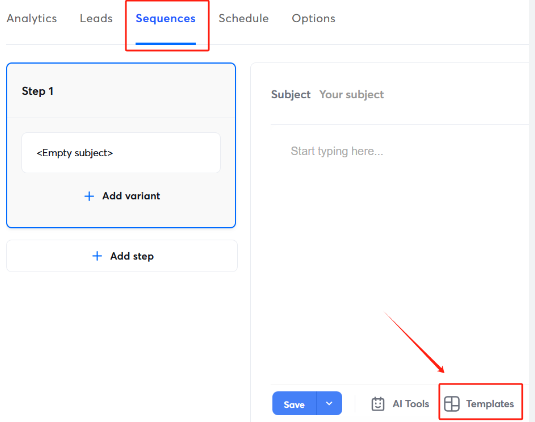
Suggested caption:
Example of a structured B2B cold email sequence managed by LeadCanal.
Reply classification
Show anonymized categories such as:
- Interested
- Referral
- Not now
- Not relevant
- Opted out
Screenshot 4: Email authentication status
Show authentic SPF, DKIM, and DMARC checks.
Gmail currently requires senders to follow its email-sender guidelines, with additional authentication and unsubscribe requirements applying to senders classified as bulk senders.
Google defines a bulk sender as one sending close to 5,000 or more messages to personal Gmail accounts within 24 hours from the same primary domain.

Frequently Asked Questions
1. What is the best cold email subject line?
There is no universal subject line that works for every campaign.
The best option accurately reflects the message and is relevant to the recipient’s role, company, or current business situation.
2. How long should a cold email subject line be?
It should be concise enough to scan quickly while still communicating the email’s purpose.
Do not remove essential context merely to meet an arbitrary character count.
3. Should I include the prospect’s name?
A first name can make the subject more conversational, but it does not automatically create meaningful personalization.
Company-specific or problem-specific relevance may be more useful.
4. Should I use the company name?
A company name can clarify that the message is targeted. However, the email body must provide genuine company-specific context.
5. Are question-based subject lines effective?
They can be effective when the question is relevant, natural, and answered or explained in the message.
Generic questions can feel automated.
6. Should I use emojis in B2B cold email subjects?
Emojis may suit certain audiences, but they are usually unnecessary for professional B2B outreach.
Test them only when they fit the recipient, market, and brand.
7. Can I write “Re:” in the first email?
Do not use “Re:” to falsely imply an existing conversation. It can mislead recipients and damage trust.
8. Should I use capital letters?
Normal capitalization is usually easier to read. Writing the entire subject in capital letters can appear aggressive or promotional.
9. How many subject lines should I test?
Start with two meaningfully different versions. Testing too many options against a small audience can make the results difficult to interpret.
10. Can LeadCanal write and test subject lines?
LeadCanal can support B2B companies with audience research, email copywriting, subject-line testing,
technical campaign setup, follow-up sequences, reply analysis, and ongoing optimization—provided these services match LeadCanal’s actual offering.
Conclusion
The best cold email subject lines are not based on tricks. They are based on relevance, accuracy, clarity, and alignment with the email body.
Before launching a campaign, make sure the subject line:
- Relates to the recipient
- Describes the message honestly
- Uses clear and natural wording
- Avoids unsupported promises
- Connects directly to the opening paragraph
- Works with a qualified prospect list
- Is evaluated using reply quality and business outcomes
For search and AI visibility, publish this guide with original LeadCanal examples, real screenshots, accurate author information, clear headings, useful internal links, and updated evidence
Google recommends helpful, reliable, people-first content and says that generative AI can support research and structure,
but mass-producing pages without adding value may violate its spam policies.
Bing introduced an AI Performance report in Bing Webmaster Tools in February 2026.
It allows publishers to review when pages are cited in Microsoft AI-generated answers and examine grounding query phrases.
This can help LeadCanal understand which pages receive AI visibility, but no content structure can guarantee ranking or citation.
Get More Qualified B2B Replies With LeadCanal
A subject line is only one part of a successful cold email campaign.
LeadCanal helps B2B companies build targeted outreach systems covering prospect research, verified data, email messaging, subject-line testing,
campaign setup, follow-ups, and performance optimization.
Contact LeadCanal today to create a cold email strategy built around your ideal customers, offer, and sales objectives.