 Skip to content

Introduction
Building a startup is challenging. Creating a great product or service is only one part of the journey. The bigger challenge is finding the right customers consistently.
Many startups fail to grow because they do not have a reliable system for attracting potential buyers. They depend on referrals, random opportunities, or occasional marketing campaigns.
While these methods can help in the beginning, they are difficult to scale.
This is where B2B lead generation for startups becomes essential.
B2B lead generation is the process of identifying potential business customers, reaching decision-makers, creating relationships,
and converting those prospects into sales opportunities.
For startups, lead generation is not just about getting more contacts. It is about finding the right companies,
understanding their challenges, and creating valuable conversations that can turn into long-term partnerships.
A successful lead generation strategy allows startups to build a predictable sales pipeline, reduce customer acquisition costs, and create sustainable growth.
At LeadCanal, we help businesses develop targeted B2B lead generation systems through accurate prospect research, strategic outreach, and data-driven campaigns designed to connect companies with the right decision-makers.
What Is B2B Lead Generation for Startups?
B2B lead generation for startups refers to the process of finding and attracting potential business customers who may need your products or services.
B2B means Business-to-Business, which means your company provides solutions to other companies instead of individual consumers.

For example:
- A SaaS startup selling project management software targets business teams.
- A marketing agency targets companies that need customer acquisition support.
- A cybersecurity company targets organizations that need security improvements.
The purpose of B2B lead generation is to create a bridge between your startup and potential customers.
A complete B2B lead generation process includes:
- Defining your ideal customer profile
- Researching target companies
- Finding decision-makers
- Creating targeted messaging
- Running outreach campaigns
- Following up with prospects
- Converting conversations into sales meetings
The best startups do not try to reach everyone. They focus on reaching the companies that have the highest chance of becoming customers.
Why Is B2B Lead Generation Important for Startups?
Startups usually have limited resources compared to established companies. They need marketing strategies that provide measurable results.
A strong B2B lead generation system helps startups in several ways.
1. Creates a Predictable Sales Pipeline
One of the biggest problems startups face is inconsistent revenue.
One month they may have several customers, while the next month they may struggle to find new opportunities.
Lead generation creates a repeatable process.
Instead of waiting for customers, startups can consistently:
- Find new prospects
- Start conversations
- Schedule meetings
- Improve conversion rates
A predictable pipeline makes business growth easier to plan.
2. Helps Find the Right Customers
A common startup mistake is targeting a very broad audience.
For example:
“We help all businesses grow.”
This message is too general.
A stronger approach would be:
“We help SaaS companies with 20–100 employees generate qualified sales meetings through targeted outbound campaigns.”
The second message speaks directly to a specific audience.
Effective lead generation helps startups understand:
- Who their customers are
- What problems they face
- What solutions they need
- Where to reach them
3. Reduces Marketing Waste
Without proper targeting, startups can waste money on:
- Wrong audiences
- Poor advertising campaigns
- Unqualified leads
- Ineffective messaging
A focused lead generation strategy ensures resources are spent on opportunities that have real potential.
Step 1: Define Your Ideal Customer Profile (ICP)
Before generating leads, startups must understand who they want to target.
An Ideal Customer Profile (ICP) describes the type of company that is most likely to purchase your solution.
A strong ICP includes:
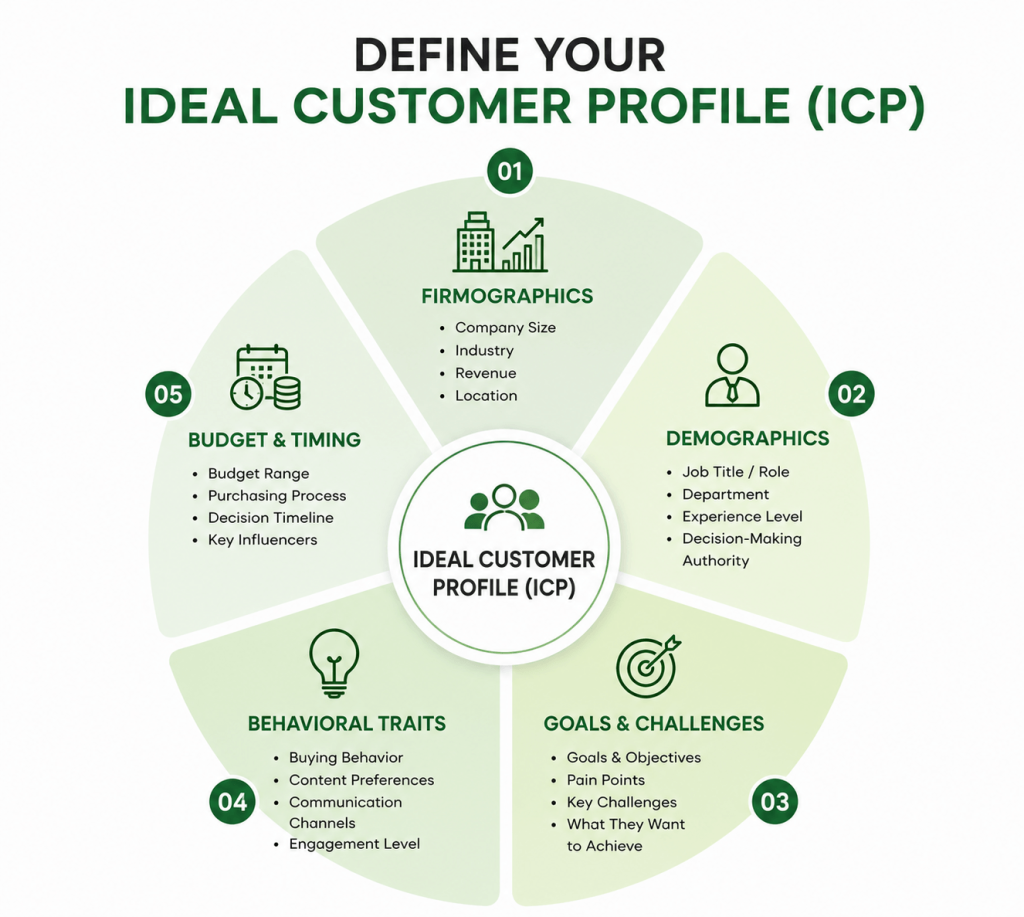
Industry
Identify industries where your product provides the most value.
Examples:
- Software companies
- Healthcare businesses
- Financial services
- E-commerce companies
- Professional agencies
Different industries have different problems, so your messaging should match their needs.
Company Size
Company size affects buying decisions.
Consider:
- Number of employees
- Revenue
- Growth stage
- Team structure
For example:
A startup selling enterprise software may target companies with large teams, while a simple productivity tool may focus on smaller businesses.
Location
Many startups choose specific markets based on opportunity.
Common B2B markets include:
- United States
- United Kingdom
- Canada
- Australia
- Europe
Choosing the right market helps improve campaign performance.
Decision Makers
Finding the right person is critical in B2B sales.
The person using your service may not be the person who approves the purchase.
Decision-makers may include:
- CEO
- Founder
- Sales Director
- Marketing Manager
- Head of Growth
- Operations Manager
Connecting with the right person increases the chance of starting valuable conversations.
Step 2: Build a High-Quality Prospect List
After defining your ICP, the next step is building your prospect database.
A professional prospect list should contain:
- Company name
- Website
- Industry
- Company size
- Contact person
- Job title
- Verified email address
- Business information
Many startups make the mistake of focusing only on the number of leads.
However, quality is more important than quantity.
A list of 500 highly targeted prospects can generate better results than thousands of unrelated contacts.
Poor-quality data creates problems such as:
- High bounce rates
- Low response rates
- Wasted sales efforts
Step 3: Create a Strong Outreach Strategy
Once you have your prospect list, the next step is communication.
The most common B2B outreach channels include:
- Cold email
- LinkedIn outreach
- Content marketing
- Partnerships
- Referral programs
The key factor is personalization.
Modern buyers receive hundreds of sales messages every month. Generic messages are easily ignored.
A strong outreach message should:
- Mention a specific business problem
- Explain your value clearly
- Be short and professional
- Include a simple next step
Cold Email Outreach for Startups
Cold email remains one of the most effective B2B lead generation methods when done correctly.
However, successful cold email is not about sending thousands of emails.
It is about sending the right message to the right people.
A successful cold email campaign includes:
Targeted Audience
Only contact companies that match your ICP.
Personalization
Show that you understand the prospect’s business.
Clear Value Proposition
Explain how you can help solve their problem.
Follow-Up Sequence
Many prospects need multiple interactions before responding.
A professional follow-up strategy increases opportunities.
LinkedIn Lead Generation for Startups
LinkedIn is one of the strongest platforms for B2B networking.
Many founders and business professionals use LinkedIn to discover solutions and build partnerships.
A successful LinkedIn strategy includes:
Optimize Your Profile
Your profile should clearly communicate:
- Who you help
- What problem you solve
- Your expertise
Share Valuable Content
Content helps build authority.
Examples:
- Industry insights
- Customer lessons
- Business tips
- Case studies
Build Relationships
Avoid immediately pushing sales.
Start conversations and build trust first.
SEO Content Marketing for Startup Lead Generation
SEO is a long-term strategy that helps startups attract potential customers through search engines.
When someone searches:
“best B2B lead generation agency”
or
“how to generate B2B leads”
they already have an interest in solving a problem.
Creating helpful content allows startups to attract these users.
A strong SEO strategy includes:
- Keyword research
- Helpful blog articles
- Service pages
- Internal linking
- Regular updates
For LeadCanal, publishing valuable content about B2B sales, prospecting, outreach, and lead generation helps attract businesses searching for these solutions.
Common B2B Lead Generation Mistakes Startups Should Avoid
Targeting Everyone
A broad audience creates weak marketing messages.
Focus on a specific customer group.
Sending Generic Messages
Personalization is essential.
Prospects respond better when messages are relevant.
Ignoring Follow-Ups
Many opportunities are lost because startups stop after one message.
Using Poor Data
Bad contact information reduces campaign performance.
Always focus on accurate prospect data.
How LeadCanal Helps Startups Generate B2B Leads
Building a successful B2B lead generation system requires research, strategy, and consistent execution.
At LeadCanal we help startups and growing businesses create effective lead generation processes through:
- Target audience research
- Prospect identification
- B2B data research
- Outreach strategy
- Lead qualification
- Campaign improvement
The goal is not simply collecting contacts.
The goal is creating real business conversations with qualified prospects.

Frequently Asked Questions
What is B2B lead generation for startups?
It is the process of finding potential business customers and converting them into sales opportunities.
How can startups generate B2B leads?
Startups can use cold email, LinkedIn outreach, SEO content, partnerships, and targeted prospecting.
What is the fastest way to get B2B leads?
Outbound methods such as cold email and LinkedIn outreach can create opportunities faster, while SEO builds long-term growth.
How many leads does a startup need?
It depends on the business model, sales cycle, pricing, and conversion rate. Quality leads are more valuable than large numbers.
Is SEO useful for startups?
Yes. SEO helps startups attract potential customers who are already searching for solutions.
Final Thoughts
B2B lead generation is one of the most important growth systems for startups.
A startup does not need thousands of random contacts. It needs a clear strategy that identifies the right customers, communicates value, and creates meaningful relationships.
By combining targeted prospecting, personalized outreach, SEO content, and continuous improvement, startups can build a predictable sales pipeline.
A strong B2B lead generation system transforms customer acquisition from guesswork into a repeatable process that supports long-term business growth.


