Skip to content
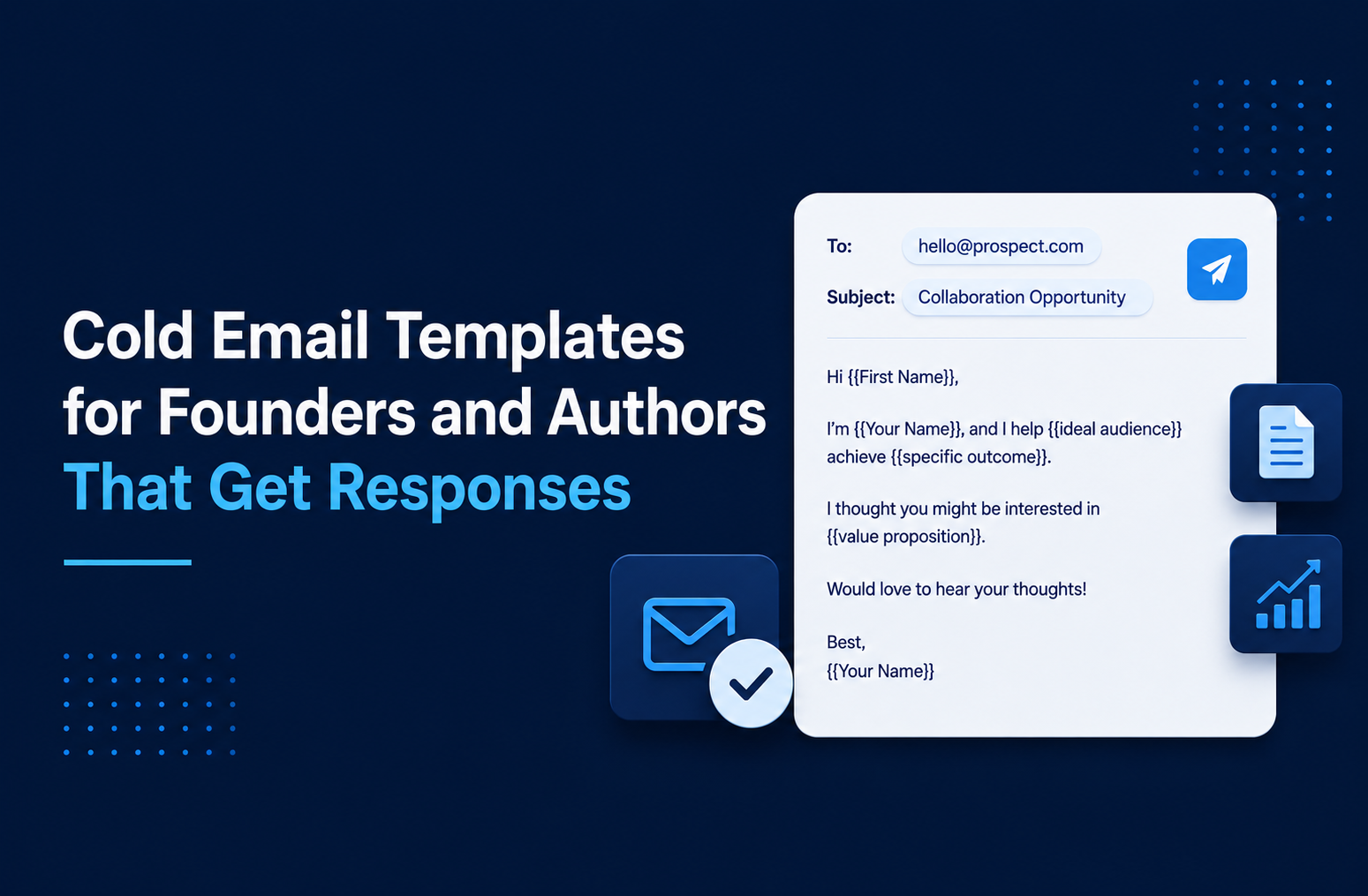
Cold emailing can feel intimidating, especially for founders and authors who want to connect with investors, collaborators, or media contacts. The key is crafting emails that are personal, concise, and value-driven. This article will guide you through effective strategies and provide ready-to-use templates so your cold emails actually get replies.
Why Cold Emails Matter
Whether you’re a founder pitching your startup or an author promoting your book, cold emails are one of the most powerful ways to reach decision-makers directly. Unlike social media or networking events, email allows you to introduce yourself professionally, showcase your value, and build a connection without gatekeepers.
The benefits include:
- Direct Access: Reach people who may otherwise be hard to connect with.
- Cost-Effective: No need for expensive campaigns or marketing tools.
- Scalable: Send multiple personalized emails in a short time.
But there’s a catch: sending generic, spammy messages won’t work. You need emails that feel human, relevant, and concise.
How to Structure a Cold Email
A good cold email should generally follow this structure:
- Subject Line: Short, clear, and attention-grabbing.
- Personalized Opening: Reference something specific about the recipient.
- Value Proposition: Explain why you’re reaching out and what’s in it for them.
- Call to Action (CTA): A simple, easy next step.
- Signature: Professional and friendly sign-off.
Subject Lines That Get Opened
Your subject line is the first thing your recipient sees, so it must grab attention without feeling salesy.
Examples:
- “Loved your recent book on startup growth a quick idea”
- “Quick question about your upcoming podcast”
- “Collaboration idea for [Recipient’s Company]”
- “Guest post opportunity for [Recipient’s Blog/Publication]”
Tips: Keep it under 8 words if possible, and avoid clickbait. Be specific and relevant.
Personalized Openings
Always show that your email is meant specifically for the recipient. Generic intros like “Dear Sir/Madam” rarely work. Instead, reference their work, recent achievements, or content they shared.
Examples:
- “I just finished reading your book Startup Success and loved your chapter on scaling teams.”
- “I saw your interview on [Podcast Name] about author marketing strategies, really insightful!”
Personalization builds trust and increases your chances of getting a reply.
Value Proposition
This is the core of your email. Explain briefly who you are and why the recipient should care. Focus on what’s in it for them, not just what you want.
Examples for founders:
“I’m the founder of LeadCanal, a tool that helps startups generate high-quality leads. I noticed your company is expanding into new markets, and I believe our platform could help streamline your outreach.”
Examples for authors:
“I’m promoting my upcoming book The Modern Entrepreneur. I think your audience would enjoy a guest post that aligns with your focus on startup growth.”
Keep this section 2–3 sentences max.
Clear Call to Action
Your CTA should be simple, specific, and actionable. Avoid vague requests like “Let me know if you’re interested.” Instead, suggest a concrete next step.
Examples:
- “Would you be open to a 15-minute call next week?”
- “Can I send you a draft guest post by Friday?”
- “Are you interested in testing our platform for your next campaign?”
The easier it is for the recipient to act, the more likely you are to get a response.
Signature
End with a professional yet friendly sign-off that includes:
- Your full name
- Your title or role
- Company or brand name
- Contact info
Example:
Best regards,
ABC
Founder, XYZ
name@domin.com
www.XYZ.com

Cold Email Templates for Founders
Here are three ready-to-use templates that founders can adapt:
Investor Outreach:
Hi [Investor Name],
I loved your talk at [Event Name] about funding early-stage startups.
I’m the founder of [Startup Name], which helps [specific problem your startup solves]. We’ve recently achieved [impressive metric or milestone] and are exploring partnerships and funding to scale.
Would you be open to a 20-minute call next week to discuss potential synergies?
Best regards,
[Email Signature]
Collaboration Outreach:
Hi [Recipient Name],
I’ve been following [Company Name] for a while and really admire your work in [specific area].
I run [Your Company], where we help [target audience]. I believe there’s a unique opportunity for us to collaborate on [specific project].
Would you be interested in a short call to explore this?
Cheers,
[Email Signature]
Media/Press Outreach:
Hi [Editor/Journalist Name],
I recently came across your article on [Topic] and thought you might be interested in a story about [your start up/product].
We’ve recently [major milestone or newsworthy achievement], and I believe it could make a great feature for your audience.
Would you like me to send over more details?
Thank you,
[Email Signature]
Cold Email Templates for Authors
Here are three templates authors can use:
Guest Post Pitch:
Hi [Recipient Name],
I’ve been following [Blog/Website Name] and love your content on [topic].
I’m an author of [Book Name], which covers [brief description]. I’d love to contribute a guest post titled “[Post Idea]” that aligns with your audience.
Would you be open to reviewing a draft?
Best regards,
[Email Signature]
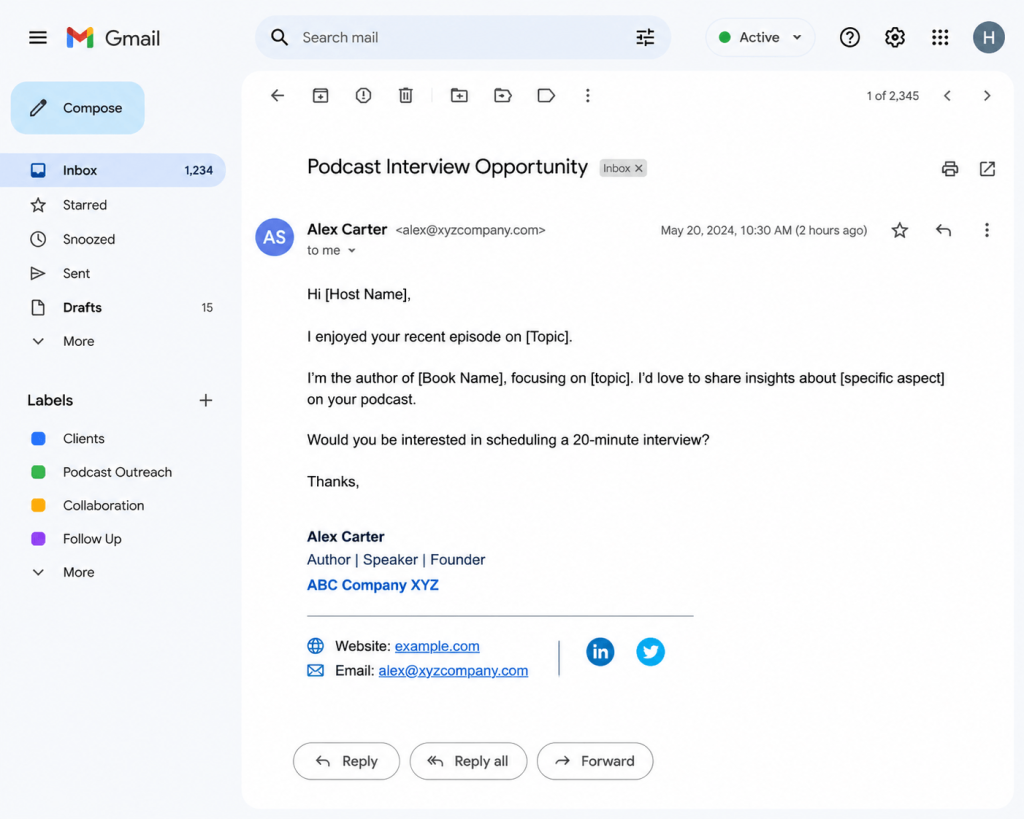
Podcast/Interview Request:
Hi [Host Name],
I enjoyed your recent episode on [Topic].
I’m the author of [Book Name], focusing on [topic]. I’d love to share insights about [specific aspect] on your podcast.
Would you be interested in scheduling a 20-minute interview?
Thanks,
[Email Signature]
Book Promotion/Collaboration:
Hi [Recipient Name],
I recently published [Book Name], which explores [topic]. I believe your audience would benefit from [specific idea].
Would you be interested in a co-promotion or feature on your platform?
Looking forward to your thoughts,
[Email Signature]
Check Email Copy Content Before Send
Before sending any cold email, it’s crucial to check your content for spammy keywords using an Email Spam Keyword Checker. Certain words or phrases, like “free,” “guarantee,” or overly promotional language, can trigger spam filters and prevent your email from reaching the recipient’s inbox. By analyzing your email copy beforehand, you can identify and replace risky words with safer, more professional alternatives. This not only improves deliverability but also makes your email feel more authentic and trustworthy. Using a spam checker ensures that your outreach messages land in the inbox, giving you a higher chance of getting a response while maintaining a polished, professional tone.

Tips to Improve Cold Email Response Rates
- Keep it short: Aim for 100–150 words. Busy professionals skim emails.
- Personalize: Mention something specific about the recipient or their work.
- Focus on value: Make sure the recipient knows “what’s in it for them.”
- Use a clear CTA: Make it easy for them to respond or take action.
- Follow up: If you don’t hear back after a week, send a polite follow-up.
Common Mistakes to Avoid
- Sending generic, copy-paste emails.
- Writing long paragraphs, keep it skimmable.
- Using overly salesy language.
- Failing to proofread for grammar or typos.
- Not including contact info or links to relevant work.
Tools That Can Help
- LeadCanal: Helps you generate leads and organize outreach campaigns.
- Hunter.io: Find professional email addresses for cold outreach.
- Mailshake or Lemlist: Schedule cold email campaigns and track responses.
Using these tools alongside your templates can help you scale your outreach while keeping emails personal and professional.
Conclusion
Cold emailing is an essential skill for founders and authors, but the difference between success and failure is in the email content and personalization. By using clear structures, relevant subject lines, and actionable CTAs, you can significantly increase your response rates.
With the templates provided in this guide, you can confidently reach out to investors, collaborators, or media contacts. Remember: keep it concise, relevant, and human, and you’ll see better engagement from every email you send.