Skip to content

Quick Answer
Cold email in 2026 is a targeted B2B outreach strategy in which a company contacts carefully selected prospects with relevant,
personalized messages to start business conversations.
A successful cold email campaign requires accurate prospect data, proper email authentication,
a clear offer, personalized messaging, controlled sending volume,
follow-ups, compliance, and continuous campaign optimization.
For B2B companies, cold email remains one of the most direct ways to reach decision-makers without waiting for prospects to discover the business through advertising,
social media, or search engines.
However, cold email is no longer a numbers game.
Sending thousands of generic messages is likely to damage domain reputation, reduce deliverability, and produce poor-quality leads.
The effective approach in 2026 is to send fewer, more relevant emails to the right people with a clear reason for contacting them.
At LeadCanal, we help B2B companies build structured cold email campaigns designed to generate qualified conversations and sales opportunities.
Table of Contents
- What Is Cold Email?
- Does Cold Email Still Work in 2026?
- Cold Email vs. Email Marketing
- Benefits and Limitations of Cold Email
- How to Build a Cold Email Campaign
- How to Write an Effective Cold Email
- Cold Email Follow-Up Sequence
- Deliverability and Technical Setup
- Cold Email Compliance
- Practical Campaign Example
- Common Cold Email Mistakes
- Frequently Asked Questions
- Conclusion
What Is Cold Email?
Cold email is a business email sent to a person who has not previously communicated with the sender.
In B2B outreach, the recipient is normally selected because they match a specific ideal customer profile.
For example, a software company may contact operations directors at logistics businesses because its product solves an operational problem relevant to that role.
Cold email should not be confused with random spam.
Professional cold outreach is:
- Sent to a carefully defined audience
- Based on a legitimate business reason
- Relevant to the recipient’s role or company
- Personalized using verified information
- Written clearly and honestly
- Easy to opt out of
- Sent through a properly configured email system
The purpose of the first email is usually not to close a sale. Its purpose is to begin a relevant conversation.
Does Cold Email Still Work in 2026?
Yes, cold email can still work in 2026, but only when it is built around relevance, deliverability, and buyer intent.
Modern inbox providers are increasingly effective at detecting mass-produced and unwanted emails.
At the same time, business decision-makers receive more automated outreach than ever before.
This means generic templates such as “I hope this email finds you well” followed by a long company introduction are less likely to generate a response.
Successful campaigns now focus on three questions:
- Is this the right prospect?
- Is the message relevant to a real business problem?
- Is there enough trust for the recipient to respond?
The strongest campaigns combine accurate targeting with concise copy, credible evidence, and a low-friction call to action.
Cold Email vs. Email Marketing
| Factor | Cold Email | Email Marketing |
|---|---|---|
| Audience | Selected prospects without a prior relationship | Subscribers or existing contacts |
| Main objective | Start B2B sales conversations | Nurture, educate, retain, or promote |
| Personalization | Usually individualized by person, role, or company | Often segmented by audience group |
| Sending style | Lower-volume, targeted outreach | One-to-many campaigns |
| Typical CTA | Reply, confirm interest, or book a meeting | Click, purchase, register, or read |
| Content length | Usually brief | Can be longer and visually designed |
| Relationship stage | First contact | Existing permission or relationship |
Cold email is normally used for prospecting, while email marketing is used to communicate with an existing audience.
Pros and Cons of Cold Email
Advantages
Direct access to decision-makers
Cold email allows a company to contact founders, department heads, directors, and other relevant professionals directly.
Predictable prospecting activity
A business can define how many qualified contacts it wants to research and approach each week.
Lower initial cost than many paid channels
Cold email does not require paying for every click or impression. However, businesses still need to invest in data, infrastructure, research, copywriting, and campaign management.
Easy to test and improve
Target markets, offers, subject lines, email copy, calls to action, and follow-up sequences can be tested systematically.
Useful for specialized B2B services
A narrow service may have a limited target market. Cold outreach makes it possible to approach that specific audience instead of advertising to a broad group.
Limitations
Deliverability must be managed carefully
Poor domain configuration, inaccurate email lists, sudden volume increases, or high complaint rates can harm inbox placement.
Results depend heavily on targeting
Even excellent copy will struggle if it is sent to people who do not need the offer.
Campaigns require ongoing optimization
Cold email is not a one-time setup. Lists, messaging, sending performance, and replies must be reviewed regularly.
Trust is initially low
The prospect does not know the sender, so the email must establish relevance and credibility quickly.
Legal requirements vary
Cold outreach should be reviewed according to the recipient’s location and the laws that apply to the campaign.
How to Build a Cold Email Campaign: Step-by-Step
Step 1: Define Your Ideal Customer Profile
Start by identifying the companies most likely to benefit from your service.
Your ideal customer profile may include:
- Industry
- Company size
- Revenue range
- Geographic location
- Business model
- Technology used
- Current growth stage
- Likely operational challenges
Avoid targeting “all B2B companies.” A narrow audience produces clearer messaging and more meaningful personalization.
Step 2: Identify the Right Decision-Maker
Select the role most closely connected to the problem you solve.
For example:
| Service | Possible Decision-Maker |
|---|---|
| Lead generation | Founder, VP of Sales, Head of Growth |
| Recruitment | HR Director, Talent Acquisition Lead |
| Cybersecurity | CTO, IT Director, Security Manager |
| Accounting | Founder, CFO, Finance Director |
| Marketing services | CMO, Marketing Director, Growth Lead |
A relevant offer sent to the wrong person can still fail.
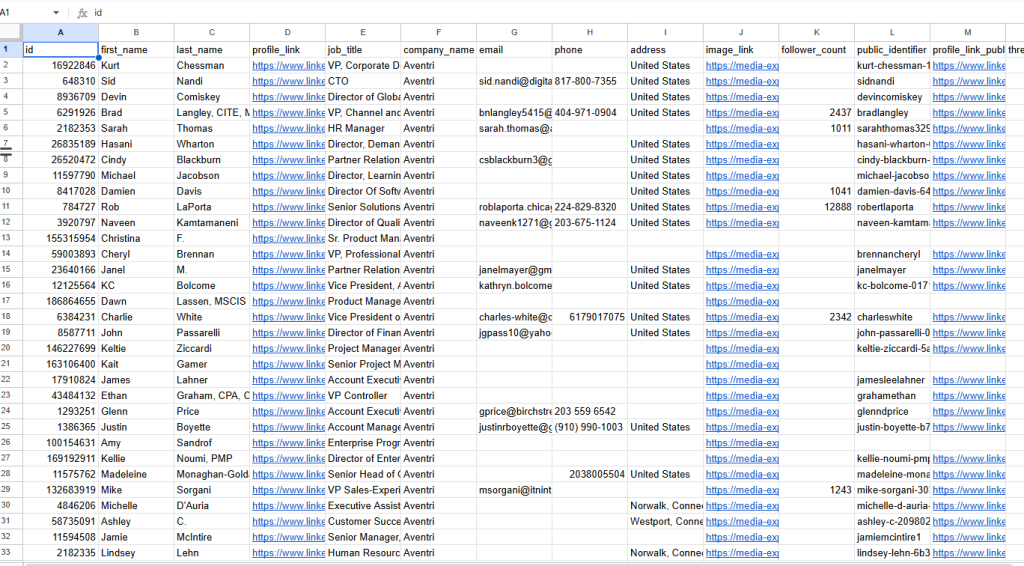
Step 3: Build and Verify the Prospect List
Collect only the information needed to qualify and personalize the outreach.
Useful fields include:
- First name
- Job title
- Company name
- Company website
- Business email address
- Industry
- Location
- Relevant trigger or observation
- Reason the company fits the campaign
Email addresses should be verified before sending. Invalid addresses can create bounces and negatively affect sender reputation.
Recommended screenshot placement:
Screenshot 1: LeadCanal prospect research sheet
Step 4: Create a Clear Offer
The offer should explain the practical outcome the prospect may receive.
Weak offer:
We provide innovative lead generation solutions for businesses.
Stronger offer:
We help B2B service companies build targeted outbound campaigns that create qualified sales conversations without relying entirely on paid advertising.
The second version explains who the service helps, what it does, and why it matters.
Step 5: Write the Email Sequence
A cold email sequence normally includes an initial message and several follow-ups.
Each message should add context instead of repeating the same request.
A useful structure is:
- Email 1: Relevant observation and primary value proposition
- Email 2: Brief clarification or useful insight
- Email 3: Proof, example, or mini case study
- Email 4: Final check-in or polite close
Step 6: Configure the Sending Infrastructure
Before launching outreach, configure the sending domain correctly.
Important email authentication standards include:
- SPF: Identifies servers authorized to send email for a domain
- DKIM: Adds a digital signature that helps verify the message
- DMARC: Defines how receiving systems should handle messages that fail authentication checks
Google’s sender guidance emphasizes email authentication and responsible sending practices.
Requirements can vary based on volume and sender type, so businesses should consult the latest provider documentation before launching campaigns.
Recommended screenshot placement:
Screenshot 2: Email authentication status

Step 7: Launch With Controlled Volume
Do not move from zero outreach to a very large sending volume overnight.
Start with a controlled campaign, monitor performance, and increase activity only when the infrastructure and list quality remain stable.
Watch indicators such as:
- Delivery failures
- Bounce rate
- Positive replies
- Negative replies
- Unsubscribe requests
- Spam complaints
- Meetings booked
- Qualified opportunities created
Open rates can be directionally useful, but privacy protections and automatic image loading can make them unreliable.
Business outcomes such as positive replies and qualified meetings are more meaningful.
Step 8: Review Replies and Improve the Campaign
Replies reveal whether the targeting, offer, and messaging are working.
Examples:
- “Not relevant” may indicate poor targeting.
- “We already use another provider” may require stronger differentiation.
- “Contact us next quarter” indicates possible timing rather than offer failure.
- No replies may suggest weak relevance, poor deliverability, or unclear copy.
Treat reply patterns as research data.
How to Write an Effective Cold Email
A strong cold email usually contains five elements.
1. Relevant opening
Mention a genuine business observation, trigger, or reason for contacting the person.
2. Problem connection
Connect the observation to a problem your company solves.
3. Clear value proposition
Explain the practical result without making exaggerated promises.
4. Credibility
Include concise proof such as a relevant process, result, experience, or example.
5. Low-friction call to action
Ask a simple question that is easy to answer.
Cold Email Example
Subject: Outbound pipeline for [Company Name]
Hi [First Name],
I noticed that [Company Name] is expanding its B2B services in [market or category].
LeadCanal helps B2B companies build targeted cold email campaigns by combining prospect research, verified data, personalized messaging, deliverability management, and campaign optimization.
Would improving the consistency of your outbound sales pipeline be relevant this quarter?
Best,
[Sender Name]
LeadCanal
This message is short, explains the relevance, and does not force the recipient into an immediate sales call.
Cold Email Follow-Up Sequence
Follow-Up 1
Hi [First Name],
Following up in case improving outbound prospecting is currently a priority.
We focus on identifying the right decision-makers and creating relevant campaigns rather than sending generic high-volume emails.
Would it be useful to share how the process works?
Follow-Up 2
Hi [First Name],
One common issue we see is that B2B campaigns focus heavily on copy while the real problem is prospect selection.
Our process starts with the ideal customer profile, qualification criteria, and offer before any email is sent.
Is this an area your team is currently reviewing?
Final Follow-Up
Hi [First Name],
I will close the loop after this message.
Should outbound lead generation become a priority later, LeadCanal can help with targeting, campaign strategy, email copy, deliverability, and optimization.
Would you prefer that I reconnect in a future quarter?
Practical Cold Email Campaign Example
Consider a fictional B2B software consultancy targeting logistics companies.
Campaign setup
- Target industry: Logistics
- Company size: 20–200 employees
- Location: United States
- Decision-maker: Operations Director
- Problem: Manual reporting and disconnected systems
- Offer: Workflow automation and systems integration
Initial mistake
The consultancy sends a generic message describing its development services.
The campaign receives few meaningful replies because the email does not connect the service to a specific logistics problem.
Improved approach
The company narrows the audience to logistics firms that use multiple disconnected platforms and are actively hiring operations staff.
The new message focuses on reducing repetitive reporting and improving information flow between existing systems.
Why the revised campaign is stronger
- The audience is more specific.
- The message addresses an operational problem.
- The offer is connected to a measurable business outcome.
- The decision-maker is relevant to the problem.
- The call to action begins a conversation instead of demanding a meeting.
This example is illustrative and should not be presented as an actual LeadCanal client result.
For a genuine case study, LeadCanal should add verified campaign details such as:
- Client industry
- Target audience
- Number of qualified prospects
- Campaign duration
- Positive responses
- Meetings booked
- Opportunities created
- Method used
- Client-approved testimonial
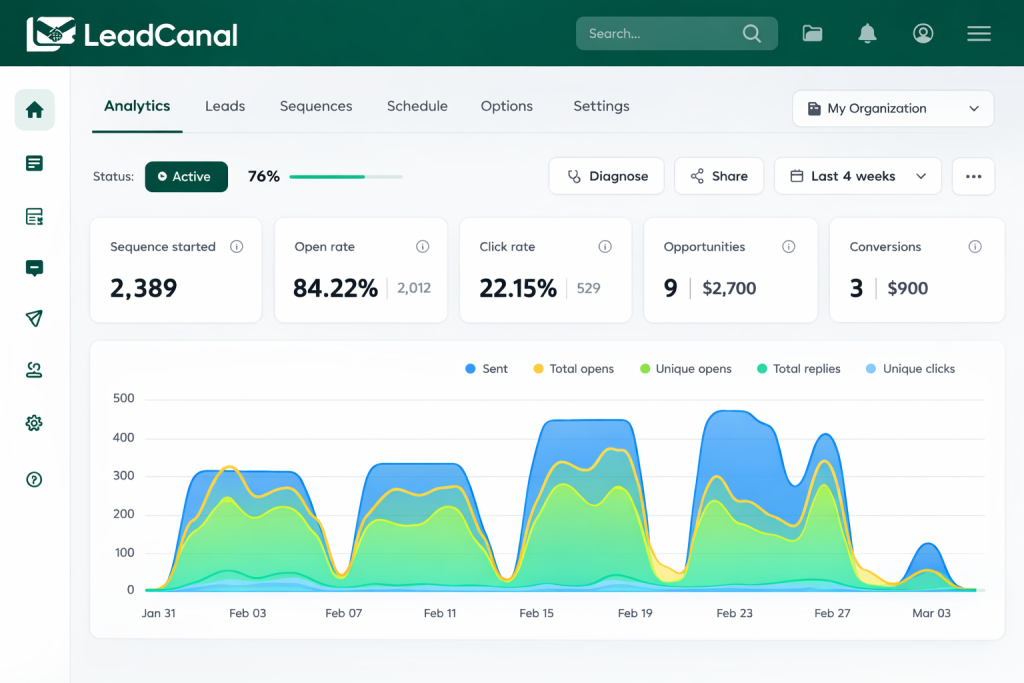
Recommended screenshot placement:
Screenshot 3: LeadCanal campaign dashboard
Cold Email Compliance
Cold outreach must follow applicable laws and provider policies.
In the United States, the CAN-SPAM Act applies to commercial email and requires measures such as accurate sender information,
non-deceptive subject lines, a valid physical address, and a functioning opt-out method. Opt-out requests must be honored according to the applicable requirements.
Requirements may differ in the United Kingdom, European Union, Canada, and other jurisdictions. Businesses should obtain qualified legal advice for campaigns involving multiple regions or sensitive data practices.
Cold email compliance is not limited to adding an unsubscribe line.
It also includes honest identification, responsible data handling, accurate claims, and respecting recipients who ask not to be contacted.
Common Cold Email Mistakes
Avoid these frequent errors:
- Buying large, unverified email lists
- Contacting people without a relevant reason
- Using misleading “Re:” or “Fad:” subject lines
- Writing long company-focused introductions
- Making unrealistic revenue guarantees
- Sending the same template to every industry
- Ignoring negative replies
- Continuing to email people who opt out
- Launching before configuring authentication
- Measuring success only through open rates
- Increasing volume before validating the offer
- Using fake personalization generated from unreliable data
The goal is not to make an automated email look human. The goal is to make the outreach genuinely relevant.
Frequently Asked Questions
1. What is cold email?
Cold email is a targeted message sent to a potential business contact who has not previously communicated with the sender.
It is commonly used to start B2B sales conversations.
2. Is cold email legal?
Cold email can be permitted under certain circumstances, but requirements vary by country, recipient type, purpose, and data source.
Businesses should follow applicable laws and obtain legal advice when necessary.
3. Does cold email still work in 2026?
Yes. It can work when campaigns use accurate targeting, relevant offers, verified contact data, proper authentication, responsible sending practices, and professional follow-up.
4. How long should a cold email be?
Most initial cold emails should be concise enough to understand quickly.
The exact length matters less than clarity, relevance, and removing unnecessary information.
5. How many follow-ups should be sent?
There is no universal number. A short sequence of several respectful follow-ups is common,
but it should stop when the recipient opts out, expresses disinterest, or when additional contact would no longer be appropriate.
6. Should cold emails contain links?
Only include links when they are necessary and trustworthy.
Too many links can create friction and may affect how the message is perceived by recipients or filtering systems.
7. What is the best cold email subject line?
The best subject line is accurate, relevant, brief, and connected to the email.
Avoid clickbait, false urgency, and misleading reply-style subject lines.
8. Should AI be used to write cold emails?
AI can support research, organization, drafting, and variation, but generated information should be checked carefully.
Google’s guidance states that generative AI may be useful for research and structure, while mass-producing content without adding value can violate spam policies.
The same principle is useful for outreach: AI should support relevance, not produce large volumes of low-value messages.
9. What metrics should a B2B cold email campaign track?
Track delivery failures, bounces, positive replies, negative replies, opt-outs, meetings booked, qualified opportunities, and revenue influenced by the campaign.
10. Can LeadCanal manage the complete cold email process?
LeadCanal can position its service around campaign strategy, ideal customer profiling, prospect research,
list verification, copywriting, technical setup, follow-ups, reply analysis, and continuous optimization.
The final service description should match the work LeadCanal actually provides.
Conclusion
Cold email in 2026 is most effective when it is treated as a structured B2B acquisition system rather than a bulk messaging tactic.
The process begins with selecting the right market and identifying the correct decision-makers.
It then requires a relevant offer, verified contact data, properly configured sending infrastructure, concise email copy, respectful follow-ups, and continuous improvement based on real responses.
Businesses that focus only on sending volume are likely to struggle.
Businesses that focus on relevance, trust, deliverability, and measurable sales outcomes have a stronger foundation for sustainable outreach.
Search engines also increasingly emphasize useful, original, well-structured, people-first content.
Google recommends creating unique material that satisfies the reader’s needs, while Bing states that content quality, structure, and freshness may improve visibility
but cannot guarantee citation in AI-generated results.
Build a Qualified B2B Pipeline With LeadCanal
Struggling to reach the right decision-makers or generate consistent sales conversations?
LeadCanal helps B2B companies create targeted cold email campaigns built around accurate prospecting, relevant messaging, professional follow-ups,
and continuous optimization.
Contact LeadCanal today to discuss a cold email strategy designed around your target market, offer, and growth objectives.